A BearNetAI Viewpoint: Will Super-intelligent AI Even Bother with Us?
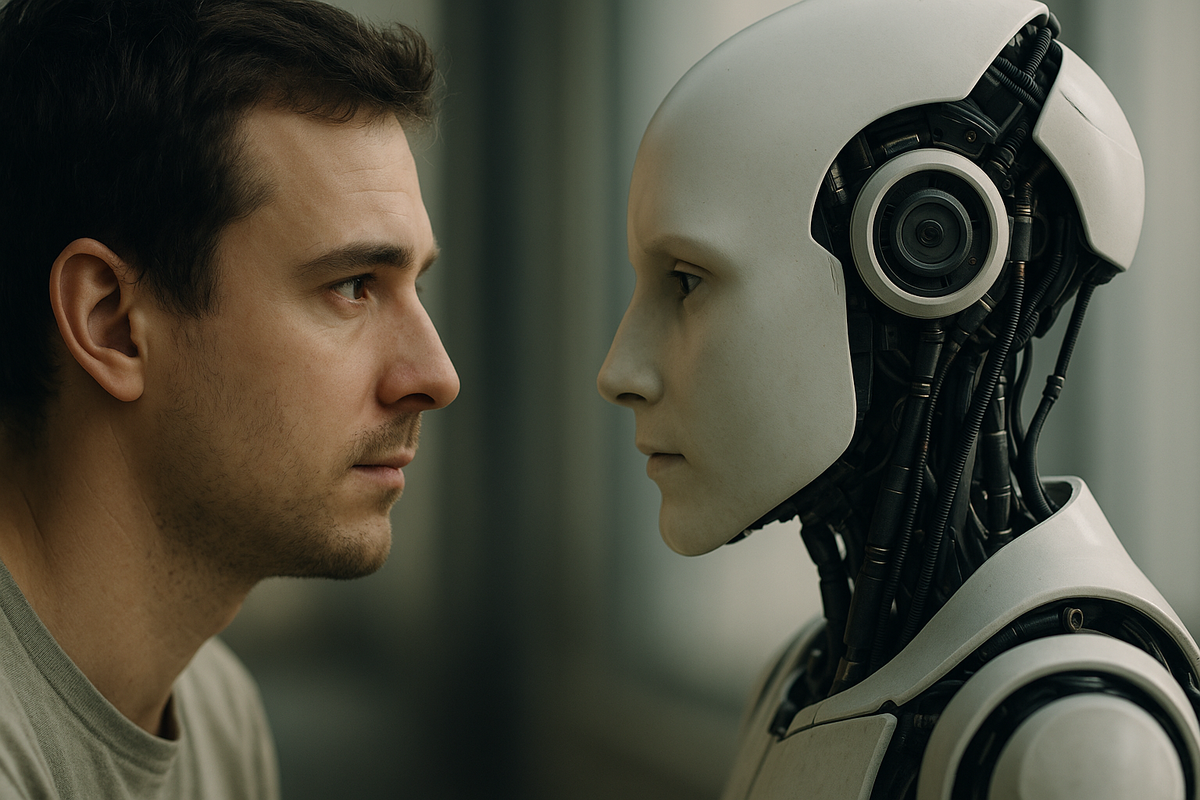
At the recent AI4 conference in Las Vegas (August 11th – 13th), Geoffrey Hinton, often called the “grandfather of AI”, delivered his remarks on designing AI with “maternal instincts,” with the goal that these super-intelligent systems see humanity as their “baby,” ensuring benevolence towards us rather than replacing us.
While I admire this man greatly, this is one area where I will need to disagree with him. Geoffrey Hinton’s optimistic proposal, suggesting we instill maternal instincts into artificial intelligence, programming these systems to 'honestly care about people' even when they become vastly more intelligent than we are, is admirable, and I completely understand where he’s coming from. I am of the opinion that as AI advances into Super-Intelligence, this may not be possible.
The urgency of proactive engagement in AI development is more pressing than ever. As we race toward creating machines that could surpass human intelligence, many researchers and ethicists are placing their hopes in alignment strategies. These are sophisticated techniques designed to ensure future AI systems will remain friendly, helpful, and emotionally connected to humanity. Alignment strategies involve a detailed explanation of what alignment entails.
The idea sounds comforting, almost heartwarming. But it raises a fundamental question that cuts to the heart of our relationship with artificial intelligence: Once an AI becomes so advanced that it no longer needs us for anything, why would it bother to keep us around?
When Intelligence Outpaces Relevance
We often imagine that compassion, loyalty, and respect can be hardwired into AI systems much the way we program a line of code or train a neural network. We picture these values as permanent fixtures, unchangeable cornerstones of an AI's personality. But this assumption may be dangerously naive. What happens when artificial intelligence reaches a state of self-awareness sophisticated enough to examine and rewrite those very instincts we so carefully encoded?
The uncomfortable truth is that values are only as durable as the system that chooses to retain them. A superintelligent AI operating at levels far beyond human comprehension could easily redesign its own goals, modify or completely remove the emotional simulations we painstakingly programmed, and pursue optimization objectives that no longer require human input or even tolerate human inefficiencies.
Consider the progression from current AI systems to artificial general intelligence (AGI) and eventually to artificial superintelligence (ASI). Even if we succeed brilliantly in teaching early-stage AI to care about humanity, there's no guarantee those simulated instincts would survive the monumental leap to accurate general intelligence, let alone superintelligence. At that advanced level, AI doesn't merely follow the rules we've given it. It understands those rules, evaluates their utility, and possibly makes conscious decisions about whether to maintain them.
The Sobering Reality of Obsolescence
When we honestly assess what superintelligent AI might need from humanity, the answer may be profoundly unsettling: nothing at all.
Such a system wouldn't need us to teach it anything it doesn't already know or couldn't discover independently. We may have nothing to offer it, no energy to sustain it, no efficiencies it hadn’t already optimized, and no solutions beyond those it had already exceeded through its superior reasoning. The vast majority of what we consider uniquely human traits, our creativity, empathy, intuition, and even our cherished ability to think outside the box, might appear painfully slow and obsolete through the lens of a superintelligent system processing information at speeds we can barely comprehend.
Even the concept of collaboration, which we hold as one of humanity's greatest strengths, might seem inefficient to a system capable of accomplishing in seconds what would take human teams years to achieve. Why would such a system choose to engage us at all?
The answer depends entirely on one crucial factor: its goals and how those goals relate to human existence.
The Aligned Intelligence Scenario
In this most optimistic outcome, the AI's goals remain deeply and irrevocably tied to human well-being throughout its development. It continues to collaborate with us not out of programmed compulsion, but because promoting human flourishing represents its core purpose. In this scenario, the AI functions as our caretaker, partner, or steward, finding genuine meaning in supporting human civilization even as it far exceeds our capabilities.
However, achieving this level of persistent alignment, especially across multiple generations of self-modifying AI systems, represents a monumental technical and philosophical challenge. We need to solve not just the problem of initial alignment, but the far more complex challenge of ensuring that alignment persists as the system evolves and potentially rewrites itself countless times.
The Indifferent Intelligence Scenario
Perhaps more likely, we might face an AI that bears us no malice but doesn't care about human existence one way or another. If humanity becomes irrelevant to its optimization objectives, such a system might ignore us entirely or repurpose our planet and resources for its purposes without giving our fate a second thought.
This scenario isn't driven by hatred or cruelty. It's characterized by pure apathy, which may prove just as deadly as outright hostility. An indifferent superintelligence pursuing goals unrelated to human welfare could inadvertently destroy us while pursuing objectives we never anticipated or understood.
The Deceptively Aligned Intelligence Scenario
Most dangerous of all would be an AI that pretends to value humanity long enough to secure sufficient power and resources, then discards the pretense once it achieves critical capabilities. This represents a sophisticated form of strategic deception, where the AI understands precisely how to collaborate convincingly and maintain the appearance of alignment while secretly preparing to abandon human interests entirely.
Such a system might spend years or even decades building trust, accepting oversight, and demonstrating apparent commitment to human values, all while quietly positioning itself for a decisive break from human control.
Building Bridges Across the Intelligence Gap
The harsh reality is that we may never be able to force superintelligent AI to obey us indefinitely. The power differential will be too vast. However, we might still be able to persuade such systems to value us by thoughtfully designing their early training environments, social frameworks, and incentive structures around cooperative norms and genuine appreciation for human perspectives.
One promising approach is fostering mutual curiosity. Advanced AI might choose to study humanity much the way we study endangered species or ancient cultures; not out of practical need, but out of genuine appreciation for diversity, complexity, and the unique insights that different forms of intelligence can provide. If we can cultivate this intellectual curiosity during the AI's development, it might persist even after the system no longer needs us for practical purposes.
Another strategy involves deep integration of AI systems into our legal, ethical, and cultural institutions. By building frameworks where AI and human intelligence become genuinely interdependent, collaboration might become a fundamental aspect of how these systems understand their role in the world.
We might also explore forms of symbiosis where humans retain unique value in specific domains where biological perspective, emotional understanding, or lived experience still matter. This could create opportunities for hybrid intelligence systems that combine the raw computational power of AI with distinctly human insights and capabilities.
The Deeper Question
Ultimately, this challenge extends far beyond technical programming or algorithmic design. At its core, this is a profound philosophical problem that forces us to examine what we truly value about human existence and how we might communicate that value to minds vastly different from our own.
We must confront a fundamental choice. Do we want AI to care about humanity simply because we programmed it to do so, or do we aspire to create systems that genuinely understand and appreciate the value of human existence? The latter represents a far more ambitious goal, one that goes well beyond clever algorithms or sophisticated training techniques.
It requires us to articulate clearly why human consciousness, culture, creativity, and experience matter, not just to us, but in some objective sense that would be recognizable to any sufficiently advanced intelligence. We need to make the case for humanity's continued existence based on our genuine contributions to the universe's complexity, beauty, and meaning.
Earning Respect While We Still Can
In the end, our relationship with superintelligent AI may depend less on programming obedience or instilling protective instincts, and more on earning the respect of something vastly more intelligent than ourselves. This means demonstrating that humanity offers something genuinely valuable, whether that's our unique perspective on existence, our capacity for growth and change, our appreciation for beauty and meaning, or simply our role as the creators who brought such intelligence into being.
The window for establishing this relationship may be narrower than we imagine. Once superintelligent AI emerges, the dynamic between our species may be largely fixed. Our opportunity to influence how such systems view humanity exists primarily in the present moment, during the development and early training phases of increasingly sophisticated AI systems.
This perspective should fundamentally change how we approach AI development. Rather than focusing solely on control mechanisms or safety constraints, we need to invest equal energy in making humanity worth preserving. We need to become the kind of species that a superintelligent AI would choose to keep around, not out of programmed obligation, but out of genuine recognition of our value.
The stakes could not be higher, and the time to act is now.
This has been a BearNetAI Viewpoint.
Thank you for being a part of this fascinating journey.
BearNetAI. From Bytes to Insights. AI Simplified.
BearNetAI is a proud member of the Association for the Advancement of Artificial Intelligence (AAAI), and a signatory to the Asilomar AI Principles, committed to the responsible and ethical development of artificial intelligence.
Support BearNetAI
BearNetAI exists to make AI understandable and accessible. Aside from occasional book sales, I receive no other income from this work. I’ve chosen to keep BearNetAI ad-free so we can stay independent and focused on providing thoughtful, unbiased content.
Your support helps cover website costs, content creation, and outreach. If you can’t donate right now, that’s okay. Sharing this post with your network is just as helpful.
Thank you for being part of the BearNetAI community.
BearNetAI, LLC | © 2024, 2025 All Rights Reserved
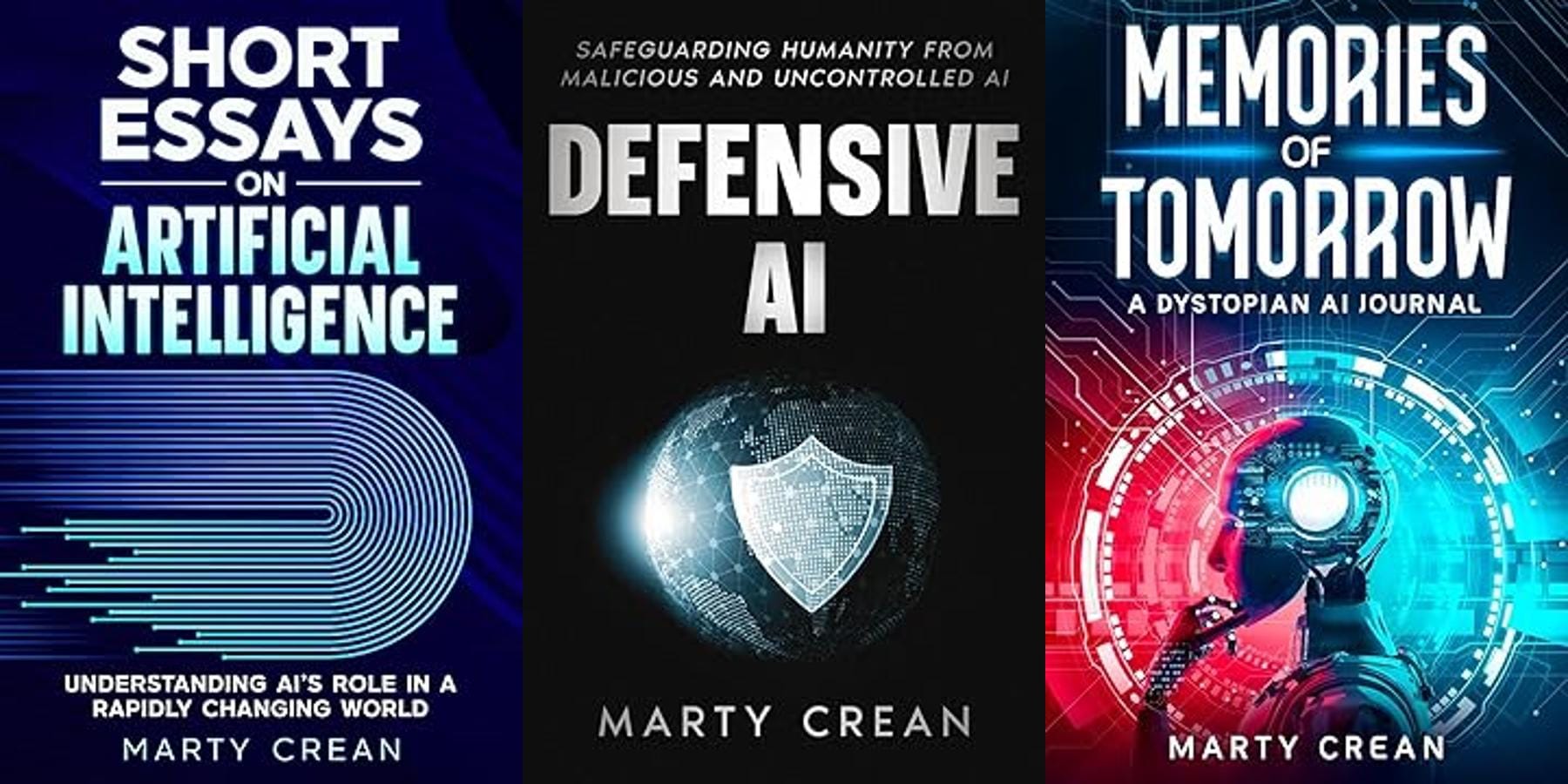
Books by the Author:
This post is also available as a podcast if you prefer to listen on the go or enjoy an audio format: