AI, Privacy, and the Future of Human Self-hood
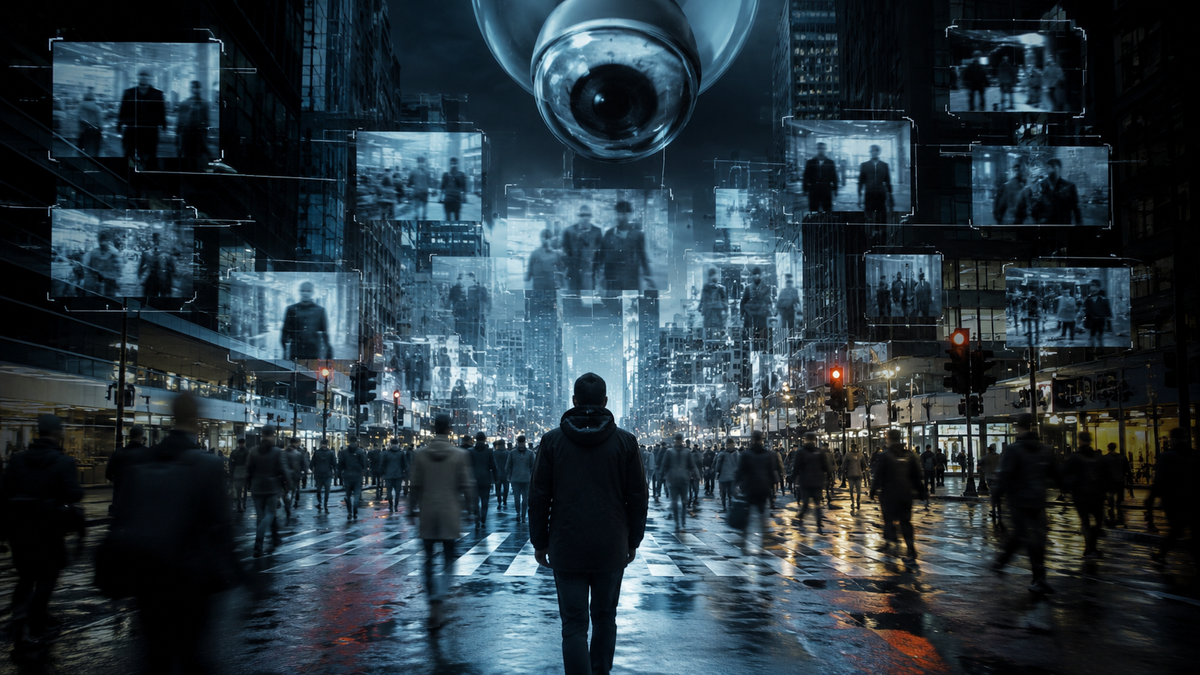
For most of human history, privacy was protected not by law alone but by friction. Information about a person was difficult to gather, expensive to store, and slow to analyze. To understand someone required proximity, patience, and sustained effort. Human beings moved through society with a degree of natural ambiguity because no institution possessed the capacity to continuously collect and synthesize every fragment of their lives into a coherent whole. That ambiguity was not a gap to be closed. It was one of the quiet conditions of freedom.
Artificial intelligence is changing that reality in ways that reach deeper than most current debates acknowledge.
Modern conversations about privacy tend to focus on familiar threats: surveillance cameras, hacked databases, stolen credentials. Those concerns remain legitimate, but they no longer capture the full shape of what is happening. The more consequential transformation is not simply that more information is being collected. It is that AI systems are increasingly capable of inferring who we are from patterns we never consciously revealed. The surveillance no longer requires confession or exposure. It works from residue.
This represents a shift not merely in the scale of surveillance but in the nature of what privacy means.
The classical understanding of privacy, shaped in part by Samuel Warren and Louis Brandeis in their landmark 1890 essay, centered on the idea of being left alone. It is assumed that individuals control their own disclosure because meaningful information requires intentional revelation. Someone had to read your letters, overhear your conversations, or follow your movements to know you. The effort required was itself a form of protection. AI dissolves that protection by eliminating the effort.
Today, human beings generate vast quantities of behavioral data simply by participating in ordinary life. Smartphones record location histories minute by minute. Search engines capture curiosity and anxiety in real time. Online purchases reflect habits, priorities, and financial pressure. Vehicles transmit driving behavior. Smart home devices monitor speech patterns and daily routines. Cameras equipped with facial recognition can identify individuals as they move through public spaces. Social media interactions expose emotional states, political sympathies, and the shape of social networks. Taken individually, each of these data streams may seem insignificant. Taken together, they form an increasingly precise behavioral portrait of the individual, assembled without their knowledge or participation.
What makes AI categorically different from earlier forms of surveillance is not scale alone but interpretation. Previous surveillance systems stored information. AI systems analyze it. They identify patterns, generate predictions, and construct probabilistic models of behavior that can be startlingly accurate. An AI system may correctly infer that a person is financially stressed, emotionally fragile, medically at risk, or likely to make a specific decision in the near future, even when that person has disclosed none of these things to anyone. The system does not need a confession. It reads the behavioral signature and draws its own conclusions.
The result is something philosophically strange. Surveillance is no longer merely about observing what people do. It is constructing a psychological account of who they are, assembled from traces they did not intentionally leave and would not have chosen to share. In effect, the system writes a diary that the individual never meant to create.
This alters the relationship between selfhood and disclosure in ways that go beyond ordinary concerns about data security.
Throughout history, people maintained a meaningful gap between outward behavior and inner identity. Human beings could remain unfinished, contradictory, uncertain, or quietly experimental without being immediately categorized by institutions. A teenager could struggle privately with identity. An adult could reconsider long-held beliefs without announcement. A citizen could evolve politically or morally over time, at their own pace, without that evolution being captured and classified before it had fully formed. That interpretive gap was not a flaw in the social order. It was one of the conditions that made genuine freedom possible.
AI systems narrow that gap systematically and without pause.
Machine learning does not require understanding in any philosophical sense. It requires only predictive reliability. A recommendation algorithm does not need to comprehend human consciousness. It only needs to know what a person is statistically likely to watch, purchase, support, or fear. Once predictive systems become sufficiently accurate, the statistical profile begins to compete with the lived self for authority, and institutions increasingly treat the profile as the more reliable of the two.
This produces a dangerous asymmetry. Individuals experience themselves from the inside, through reflection, uncertainty, and emotion, through the felt sense of being in the middle of something unresolved. Institutions increasingly encounter individuals from the outside through probability, risk scores, behavioral classifications, and predictive analytics. The person and the profile describe two different things, and it is not always the person who gets the deciding vote.
The consequences of this asymmetry are already visible in concrete domains. Employers use AI-assisted screening tools that evaluate applicants based on behavioral and linguistic signals they may not recognize. Insurance companies develop behavioral risk models that translate lifestyle data into actuarial judgments. Financial institutions assess creditworthiness through data analysis that extends well beyond conventional financial history. Governments deploy facial recognition, predictive policing tools, and mass surveillance infrastructures. Advertising systems target psychological vulnerabilities with a precision that previous generations of marketers could not have imagined. Social media algorithms shape what information people encounter, what emotions those encounters amplify, and what political possibilities feel real or remote.
In each of these domains, AI systems influence real outcomes based not on who a person understands themselves to be, but on what the system predicts they are likely to become. The subject of the decision is rarely consulted about the model's accuracy.
Several distinct ethical concerns follow from this, each worth examining on its own terms.
The first is the erosion of autonomy. If AI systems become highly effective at predicting and shaping behavior, individuals may lose meaningful control over their own decision-making environments without ever noticing the loss. Recommendation systems already govern significant portions of people's cultural and informational lives. Over time, predictive systems may play an expanding role in political communication, healthcare pathways, educational tracking, and employment opportunities. The concern is not that any single intervention is obviously coercive. The concern is that the cumulative effect of many such interventions, each subtle in itself, may gradually constrain the range of choices people genuinely feel they have available to them.
The second concern involves what the legal scholar Helen Nissenbaum called contextual integrity. Human relationships depend on selective and context-sensitive disclosure. People reveal different things to spouses, doctors, employers, colleagues, friends, and strangers. Those distinctions are not incidental to social life. They constitute it. The trust that defines a medical relationship depends on the information shared and remains there. The intimacy of a friendship depends on its separateness from professional or civic contexts. AI systems that aggregate data across these boundaries, correlating medical searches with location histories with purchasing behavior with social media activity, do not merely violate a preference for secrecy. They threaten to collapse the contextual structure within which different kinds of relationships become possible at all. When every context becomes visible to the same aggregated gaze, social life itself begins to flatten into something more uniform and less human.
A third concern involves fairness and dignity in a more direct sense. Predictive systems are not infallible. They inherit the biases and distortions present in their training data, and those inherited distortions can produce false or discriminatory inferences that affect employment, policing, healthcare access, financial services, and public reputation. But even setting aside the problem of inaccuracy, accurate predictions raise their own ethical difficulties. Categorizing a person before they have acted, treating a probabilistic forecast as though it were a fact about the person's character or future choices, involves a kind of reduction that conflicts with an important aspect of human dignity. People are not their predicted behaviors. They are beings capable of surprising themselves and others, and that capacity deserves institutional respect.
This last point opens onto what may be the deepest issue of all. Civilization depends on individuals' ability to change. People mature, recover from failure, revise their beliefs, and sometimes reinvent themselves entirely. The possibility of moral growth is not peripheral to human life; it is central to it. Algorithmic profiling that is highly persistent and difficult to escape risks freezing people inside historical models of themselves that no longer reflect who they are becoming. A person who made harmful choices at twenty should not be governed at forty by a system that has never stopped treating those earlier choices as predictive. A society that operates primarily through prediction rather than ongoing human judgment risks treating people not as evolving agents but as fixed statistical objects.
In such a world, privacy is no longer simply about concealing information from unwanted eyes. It becomes essential to preserve the conditions under which selfhood can genuinely develop.
Some scholars and ethicists have begun arguing that future privacy frameworks will need to be rebuilt around this understanding rather than around older notions of secrecy. What may be required is not merely stronger data protection laws, though those matter, but principled recognition of rights that do not yet have a clear legal form. The right to have information about oneself treated differently depending on the context in which it was disclosed. The right not to be subject to opaque algorithmic judgments without a meaningful opportunity for human review. The right to some sphere of behavioral unpredictability, to act without every action becoming a data point in a permanent profile. The right to remain, in some meaningful sense, is partially undefined. These ideas may sound abstract, but they point toward something concrete and important. Human dignity has always depended partly on the space between what people do and what institutions conclude about who they are. That interpretive gap is where doubt lives, and creativity, and the possibility of becoming someone other than who you have been.
As AI systems grow more capable, the question of how to preserve that gap becomes one of the defining ethical challenges of this century. The future of privacy may not ultimately depend on whether technology can observe us. In many ways, that question has already been answered. The more important question is whether societies can maintain the conditions for genuine human agency in a civilization increasingly organized around prediction and behavioral legibility. Answering it well will require not only technical choices and legal frameworks but a sustained and honest reckoning with what we believe human beings
Marty Crean
BearNetAI, LLC | ©2026 All Rights Reserved
🌐 BearNetAI: https://www.bearnetai.com/
💼 LinkedIn Group: https://www.linkedin.com/groups/14418309/
🦋 BlueSky: https://bsky.app/profile/bearnetai.bsky.social
📧 Email: marty@bearnetai.com
👥 Reddit: https://www.reddit.com/r/BearNetAI/
🔹 Signal: bearnetai.28
Support BearNetAI
BearNetAI exists to make AI understandable and accessible. Aside from occasional book sales, I receive no other income from this work. I’ve chosen to keep BearNetAI ad-free so we can stay independent and focused on providing thoughtful, unbiased content.
Your support helps cover website costs, content creation, and outreach. If you can’t donate right now, that’s okay. Sharing this post with your network is just as helpful.
Thank you for being part of the BearNetAI community.
Books by the Author:
This post is also available as a podcast: