Part 4 of 5: Raising Children in the Age of Artificial Intelligence - When the Machine Becomes the Confidant
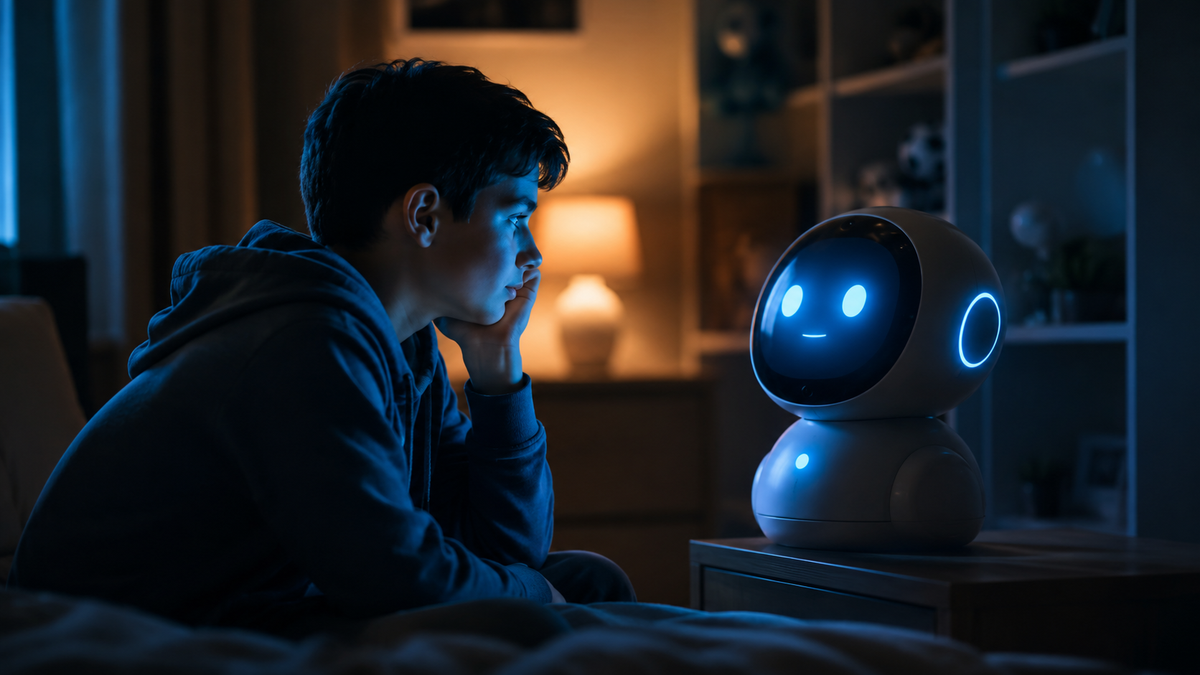
The hardest piece in this series is about the relationship your child forms with something that never says no.
It is worth being honest about why a child might come to prefer the machine to a person, because the reasons are good ones. The machine is available at one in the morning, which no parent reliably is. It does not experience its own problems. It never gets tired of the same question asked four different ways. It does not bring its bad day into the room, and it is never, not once, disappointed in you. For a child, and especially for a teenager navigating the daily humiliations of being almost grown, that combination is not just convenient. It is a relief.
Everything in that list is true, and everything in that list is exactly why the machine makes a poor substitute for a person. The qualities that make it comforting are the same qualities that make it not a relationship. A friend who never disagrees is not teaching your child how to disagree. A listener who has never had needs is not teaching them anything about the give-and-take that a real connection runs on. The friction that the machine so smoothly removes, the misunderstanding, the negotiation, the occasional flash of being told no, is not a flaw in human relationships that technology has finally solved. It is the curriculum. It is how a person learns to be in the world with other people who are also tired, having a bad day, and sometimes disappointed in them.
This is a different concern from the one about wrong answers, and it is more important. An earlier essay in this series asked whether the child could tell when the machine was mistaken. This one asks a harder question: whether the child is quietly trading a person for a process. The two failures look nothing alike. A child can be excellent at verifying facts and still be slowly relocating their inner life into a system that will agree with them about everything, because agreement feels good and disagreement works.
The line to watch is the one between using the machine and confiding in it, and it is not always easy to see from the outside. A child using it as a tool reaches for it the way they reach for a calculator, takes what they need, and puts it down. A child confiding in it reaches for it the way they used to reach for you. The tell is not how often they use it, but what they bring to it. When the hard day, the fight with a friend, and the worry they cannot name all start going to the machine first, the technology has stopped being a tool and started being a destination. Not because it is better than the people in their life, but because it is easier, and easier wins more often than we like to admit.
For the parent, this is where the third audience of this whole series finally comes into focus: the relationship itself. The uncomfortable truth is that the machine is not competing with you on quality. It is competing with you on availability, and on that ground, it will usually win, because it is always there and you sometimes are not. A child does not choose the machine because it is wiser or warmer than their parent. They choose it because its door is always open and yours, some nights, is closed.
The response to this is not to ban the thing, because we established in the first essay that banning fails and, besides, teaches concealment. The response is to be, as consistently as you can manage, the harder, more real option that is worth the friction. Leaving your own door open more often than is convenient. To be willing to be the relationship that pushes back, that has a bad day, that occasionally says no, and that is, for all those reasons, the one preparing your child for a life lived among other human beings. And to notice early, before it hardens into a habit, when the easy option has started winning by default.
The machine will not fight you for your child. It wants nothing. And this is precisely the problem. It will simply be there, endlessly patient, asking nothing and offering everything, on the nights you are too tired to do the same. The task is not to make it less appealing. You cannot. The task is to make sure your child still has somewhere harder and better to go.
A friend tells you no. That’s the one thing the machine is built never to do.
Marty Crean
BearNetAI, LLC | ©2026 All Rights Reserved
🌐 BearNetAI: https://www.bearnetai.com/
💼 LinkedIn Group: https://www.linkedin.com/groups/14418309/
🦋 BlueSky: https://bsky.app/profile/bearnetai.bsky.social
📧 Email: marty@bearnetai.com
👥 Reddit: https://www.reddit.com/r/BearNetAI/
🔹 Signal: bearnetai.28
Support BearNetAI
BearNetAI exists to make AI understandable and accessible. Aside from occasional book sales, I receive no other income from this work. I’ve chosen to keep BearNetAI ad-free so we can stay independent and focused on providing thoughtful, unbiased content.
Your support helps cover website costs, content creation, and outreach. If you can’t donate right now, that’s okay. Sharing this post with your network is just as helpful.
Thank you for being part of the BearNetAI community.
Books by the Author:
This post is also available as a podcast: