The Myth of the Human in the Loop

Artificial intelligence tends to sound safer the moment someone can say that a person remains in charge. The phrase "human in the loop" turns up in government reports, corporate presentations, academic papers, and news coverage, and it does its work quietly. It tells a nervous public that, however capable the machine becomes, a human still stands between the system and its consequences. The machine processes information, produces recommendations, and carries out tasks, while a human reviews the consequential calls and approves them before anything irreversible happens.
For a great many people, that arrangement functions as a comfort blanket. If a human stays in control, the risks feel manageable. If a human must approve an action before it occurs, mistakes can be caught before they cause harm. The difficulty is that comfort runs well ahead of the facts. In a surprising number of systems, humans have become symbolic participants whose presence supplies the appearance of oversight rather than its substance. The real question was never whether a human is involved. The question is whether humans can change the outcome.
The instinct to keep a person inside an automated process is older than artificial intelligence. Air traffic control, industrial automation, and military command systems have relied for decades on a blend of human judgment and machine assistance, on the sound reasoning that computers are good at speed and consistency while people are good at judgment and context. When AI moved into medicine, finance, and law enforcement, that same logic carried over, and policymakers promised that humans would stay involved in the decisions that mattered. On paper the design is close to ideal. Real systems rarely behave the way their designers imagined.
Picture a physician reviewing a single recommendation from an AI system. She can study the suggestion, weigh the patient in front of her, and decide whether it holds up. The work is manageable because the volume is low. Now picture that same physician reviewing several hundred recommendations a day. The time pressure climbs, attention fragments, and fatigue starts to shape the decisions. Push the volume to several thousand and the reviewer is no longer evaluating anything. She is managing a flow of information that has outrun her capacity to think about it. The human is still in the loop, but the nature of her involvement has quietly changed into something else.
Researchers have documented this pattern for a long time. Security analysts know it as alert fatigue, clinicians know it as alarm fatigue, and operators of complex systems know the sensation of being swamped by more signals than any person could reasonably weigh. When nearly every item looks routine, the reviewer learns that approval is almost always the right answer. The process turns mechanical, and critical thinking erodes until the human role amounts to little more than clicking a button. The presence of a human guarantees nothing about the quality of the oversight they provide.
The most dangerous version of this problem is the one that feels reassuring. An organization can state that a human reviews every decision, a regulator can take comfort in the requirement, and a customer can assume that real safeguards stand behind the service, while the review itself remains a formality. The error lies in mistaking presence for effectiveness, because a person can be present without being empowered, can approve decisions without understanding them, and can be held responsible for actions they had no practical means of preventing.
Artificial intelligence sharpens the problem because so many modern systems operate at speeds no person can match. Financial platforms execute trades in fractions of a second, and autonomous vehicles take in thousands of environmental signals every second and respond continuously. No human can evaluate each of those actions one at a time, and organizations have responded by changing the human's position entirely. Rather than seating a person inside every decision, they place the person above the system. The machine runs on its own within defined limits while the human watches overall performance and steps in when something goes wrong. The industry calls this "human oversight" rather than "human control," and the difference is not merely cosmetic. Many specialists consider it the more honest arrangement, since a system performing thousands of actions an hour cannot be reviewed action by action. But the shift opens a difficult question about who is responsible for the result.
When humans stop reviewing individual decisions, it becomes far less clear who is accountable when something fails. Most people assume accountability follows authority. We tend to believe that anyone responsible for an outcome must have held meaningful power over the process that produced it, and artificial intelligence breaks that assumption cleanly in half. A supervisor can be formally responsible for a system while having almost no visibility into the decisions it makes from one moment to the next, which leaves a genuine mismatch between the responsibility she carries and the control she holds.
That mismatch shows itself most clearly in the question of explainability. Many advanced systems are enormous statistical models that produce strikingly accurate outputs without offering any simple account of how they arrived at them. A doctor receives a recommendation, a loan officer receives a risk score, and in each case, the conclusion arrives while the reasoning stays out of reach. Approving a decision you cannot follow is not informed judgment. It is trust, and trust is not the problem. Modern life runs on it constantly. Trouble begins when trust becomes automatic instead of deliberate. People are remarkably prone to automation bias, the habit of placing too much confidence in anything a machine produces, and study after study has shown people deferring to automated systems even when the evidence in front of them suggests the system is mistaken. This sets up a quiet paradox. The more accurate these systems become, the less inclined people are to question them, and as scrutiny falls, oversight grows weaker. Success can mitigate the very review it was supposed to strengthen.
The stakes climb higher as these systems move into territory that involves judgment rather than calculation. A system might accurately predict that a defendant will miss a court date or that a borrower will default. The accuracy of this tells us what is likely to happen. It says nothing about what a society ought to do with that knowledge. Questions of fairness, justice, privacy, and basic rights are value judgments, and they remain stubborn human concerns.
Advocates of human oversight argue that keeping people involved is how we protect those values, and the worry behind that argument is legitimate. But dropping a person somewhere into the workflow does not ensure that ethical reflection takes place. A rushed employee, clearing hundreds of recommendations per shift, has neither the time nor the standing to challenge a questionable result. Real ethical oversight requires time, information, the authority to say no, and enough independence to mean it. Strip those away, and the human role becomes ceremonial rather than substantive.
This is the distinction that ought to shape the rules now being written for artificial intelligence. Many proposed frameworks require human oversight for high-risk applications, and the intent is admirable, but a rule demanding human involvement may miss the real problem. A checkbox confirming that someone reviewed a decision says nothing about whether the review meant anything. Effective governance must aim at outcomes rather than gestures, building systems in which a human can genuinely move the result. That means facing some uncomfortable questions about every deployment. Can the person understand what the system is showing them? Can they realistically review the decisions in the time available? Can they push back without paying for it within their own organization? Can they stop the system when stopping it is the right call? Where the honest answer is no, the presence of a human offers far less protection than the public has been led to expect.
Artificial intelligence is going to keep gaining autonomy, for reasons that are practical rather than ideological. These systems process information faster than people, run without rest, and scale to volumes that would bury any human team. Reviewing every action by hand was never going to last. What society needs instead is a more disciplined understanding of what oversight is for. People should not try to review every decision. They should review the decisions that carry the most weight, set the goals, draw the boundaries, monitor performance, dig into failures, and retain the ability to intervene when circumstances demand it.
"Human in the loop" became a powerful phrase because it gestures at control, responsibility, and safety all at once. A symbol, though, is no substitute for the thing it stands for. A human who cannot follow a recommendation provides no real oversight. A human who cannot keep up with the volume provides no real oversight. A human with no authority to intervene provides no real oversight. In each case, the look of control conceals the absence of any real influence. The myth endures because it offers a comforting story, one in which progress marches on while human judgment stays firmly in command. Reality is harder than that. Human oversight can be genuinely valuable, and human accountability still matters, but meaningful oversight asks for understanding, authority, attention, transparency, and the power to act. The question worth asking is not whether a human is in the loop.
It is whether humans can still make a difference...
Marty Crean
BearNetAI, LLC | ©2026 All Rights Reserved
🌐 BearNetAI: https://www.bearnetai.com/
💼 LinkedIn Group: https://www.linkedin.com/groups/14418309/
🦋 BlueSky: https://bsky.app/profile/bearnetai.bsky.social
📧 Email: marty@bearnetai.com
👥 Reddit: https://www.reddit.com/r/BearNetAI/
🔹 Signal: bearnetai.28
Support BearNetAI
BearNetAI exists to make AI understandable and accessible. Aside from occasional book sales, I receive no other income from this work. I’ve chosen to keep BearNetAI ad-free so we can stay independent and focused on providing thoughtful, unbiased content.
Your support helps cover website costs, content creation, and outreach. If you can’t donate right now, that’s okay. Sharing this post with your network is just as helpful.
Thank you for being part of the BearNetAI community.
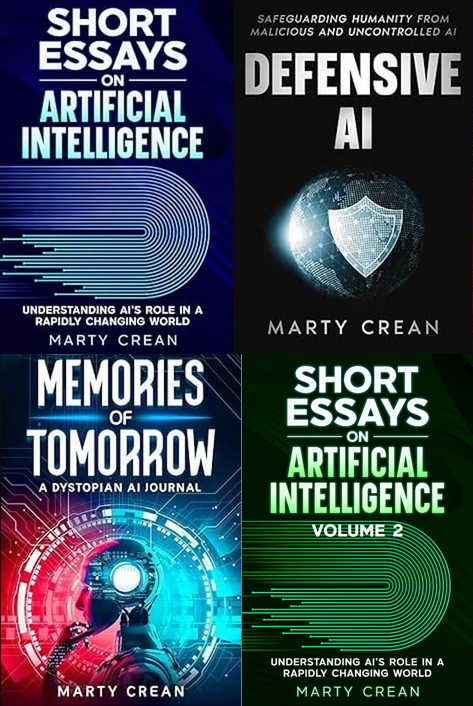
Books by the Author:
This post is also available as a podcast: