Bytes to Insights: Weekly News Digest for the Week of April 12th, 2026

Welcome to Bytes to Insight for the week of April 12th, 2026, where we discuss the latest breakthroughs and trends in artificial intelligence.
The week of April 12th, 2026, reflected a continued acceleration in artificial intelligence capabilities alongside growing attention to real-world risks and applications. One of the clearest themes was the rapid advancement of large-scale models and agent-based systems. New and updated models demonstrated meaningful improvements in reasoning, coding, and long-running task execution, with some systems now capable of handling complex multi-step workflows with greater autonomy and reliability. At the same time, competition among leading AI developers intensified, with proprietary and open models narrowing the performance gap and pushing toward larger context windows, lower costs, and more practical enterprise use cases.
One of the highlights of the week was the release of Stanford University's annual Artificial Intelligence Index, a comprehensive assessment of the field's standing. The report painted a picture of an industry advancing at a pace that continues to outstrip nearly every surrounding system meant to measure, govern, or prepare for it. Top AI models, despite predictions that progress would stall, keep improving, and consumer adoption of generative AI has reached 53 percent of the global population within just three years, a rate that surpassed both the personal computer and the internet in their comparable early phases.
The geopolitical dimension of AI development drew considerable attention in the Stanford report. The gap between American and Chinese model performance has narrowed to nearly nothing. As of March 2026, Anthropic holds the top spot in community-driven performance rankings, but only by about 2.7 percentage points over the nearest Chinese competitors. The two countries have alternated at the top ranking multiple times over the past year, and the report notes that each holds distinct advantages that complicate any simple comparison.
Benchmark performance was another focal point. On Humanity's Last Exam, a notoriously difficult assessment built by nearly a thousand subject-matter experts, the best models as of April 2026 have crossed the 50 percent accuracy threshold. That figure represents a dramatic leap from just over 8 percent when the benchmark launched. Both Anthropic's Claude Opus 4.6 and Google's Gemini 3.1 Pro have reached that milestone. At the same time, researchers cautioned that benchmark scores often fail to map cleanly onto real-world usefulness, and some widely used benchmarks have been found to carry significant errors in their construction.
The most striking model-related development of the week centered on Anthropic. The company confirmed the existence of Claude Mythos, an internal model it described as its most capable to date, but announced it would not be made publicly available. Internal testing reportedly triggered Anthropic's highest safety classification, a threshold reserved for systems approaching genuinely dangerous capability levels. Rather than release the model through standard channels, Anthropic restricted access to a small group of organizations under a dedicated program focused on using the model's capabilities to identify and remediate software vulnerabilities. The decision drew significant attention as a rare instance of a frontier lab actively withholding a model from public deployment on safety grounds.
The energy footprint of AI continued to generate concern. The Stanford Index reported that global AI data center power capacity has reached roughly 29.6 gigawatts, a figure comparable to the power needed to serve the entire state of New York at peak demand. Water consumption tied to cooling and hydroelectric power for inference operations was also flagged as a growing resource pressure. These environmental costs are increasingly shaping public and policy conversations about the long-term sustainability of the current pace of build-out.
Harvard scientists published findings suggesting that introducing controlled randomness into how robots navigate crowded environments significantly reduces congestion and prevents coordination breakdowns in dense swarm scenarios. The work is relevant to warehouse logistics and other settings where large numbers of autonomous machines must move simultaneously in confined spaces. Separately, researchers at Chalmers University of Technology in Sweden advanced theoretical work on a new class of quantum computing systems built around what they describe as giant superatoms, a potential avenue toward more stable and scalable quantum hardware.
Another major development was the increasing integration of AI into physical systems and real-world environments. Advances in robotics and simulation are allowing AI trained in virtual environments to transition more quickly into real-world deployment, accelerating progress across industries such as manufacturing, agriculture, and energy. This signals a shift from pure digital intelligence to what many call physical AI, in which intelligent systems interact directly with the world around them.
Industry strategy also evolved during the week, particularly as large technology companies adjusted their AI development strategies. Notably, new model releases and initiatives suggested a move toward hybrid ecosystems that blend open and closed approaches, reflecting both competitive pressures and the need to balance innovation with control and monetization. At the same time, global conferences and upcoming events highlighted how central AI has become to cloud computing, media, and enterprise software, with major announcements expected to further expand AI capabilities across consumer and business platforms.
On the policy and governance front, concerns about AI risks continued to gain traction. Financial regulators began actively testing how AI could impact market stability, including the possibility that autonomous systems might amplify volatility during periods of stress. These efforts reflect a broader shift from theoretical discussions of AI risk to practical scenario testing, particularly in critical infrastructure sectors. While current assessments suggest that systemic risks remain limited for now, there is growing recognition that rapid adoption could quickly change that.
At the same time, AI’s societal applications continued to expand, with initiatives focused on using the technology for public benefit. New programs and competitions aimed at improving road safety and other real-world challenges demonstrated how AI is increasingly being directed toward solving tangible problems. This highlights a parallel narrative to rapid technical progress, one in which governments, institutions, and educators are trying to harness AI for positive social impact rather than purely commercial or competitive advantage.
Taken together, this week's developments illustrate a field advancing on multiple fronts simultaneously. Technical capability is improving rapidly, real-world deployment is accelerating, and institutional awareness of both opportunity and risk is deepening. The trajectory suggests that AI is moving beyond experimentation into a phase where its influence on infrastructure, industry, and society becomes both more immediate and more consequential.
Support BearNetAI
BearNetAI exists to make AI understandable and accessible. Aside from occasional book sales, I receive no other income from this work. I’ve chosen to keep BearNetAI ad-free so we can stay independent and focused on providing thoughtful, unbiased content.
Your support helps cover website costs, content creation, and outreach. If you can’t donate right now, that’s okay. Sharing this post with your network is just as helpful.
Thank you for being part of the BearNetAI community.
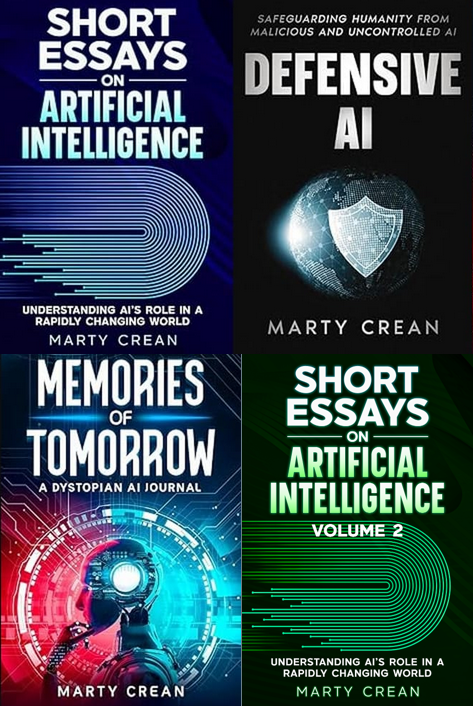
Books by the Author:
This week’s Bytes to Insights Weekly News Digest is also available as a podcast:
LinkedIn BlueskySignal - bearnetai.28
BearNetAI, LLC | © 2025 All Rights Reserved