Bytes to Insights: Weekly News Digest for the Week of April 19th, 2026

Welcome to Bytes to Insight for the week of April 19th, 2026, where we discuss the latest breakthroughs and trends in artificial intelligence.
The week of April 19th, 2026 highlighted how rapidly artificial intelligence was evolving from a collection of experimental tools into infrastructure deeply embedded across cybersecurity, software development, enterprise operations, and global competition. Much of the discussion centered around increasingly autonomous “agentic” AI systems that can perform multi step tasks with limited human supervision. Major technology firms continued racing to deploy systems capable of navigating software environments, writing and debugging code, conducting research, and coordinating workflows across digital platforms. The conversation surrounding AI was no longer focused solely on chatbots, but on AI systems acting more like collaborators or operational agents inside businesses and institutions.
Cybersecurity emerged as one of the most significant themes of the week. Anthropic’s highly restricted Claude Mythos model generated intense attention after reports showed it was capable of discovering large numbers of previously unknown software vulnerabilities. Mozilla revealed that the model had helped identify hundreds of Firefox security flaws, reinforcing concerns that frontier AI systems were becoming powerful enough to dramatically accelerate both defensive and offensive cyber capabilities. At the same time, OpenAI introduced its own security focused initiative called Daybreak, aimed at using advanced AI systems to proactively locate and mitigate vulnerabilities before attackers could exploit them. These developments intensified ongoing debates about how much access the public, corporations, or governments should have to increasingly capable AI systems with dual use potential.
The enterprise AI race also accelerated significantly during this period. Anthropic expanded major partnerships with consulting and enterprise firms, particularly through a large scale collaboration with PwC that involved training tens of thousands of employees to use Claude based tools. Reports suggested that businesses were increasingly adopting AI systems not simply for experimentation, but as operational productivity tools embedded into finance, coding, insurance underwriting, supply chains, and internal knowledge management. Industry analysts noted that AI adoption inside corporations was moving from isolated pilot programs into organization wide integration. Much of the momentum centered on coding assistants and AI agents capable of autonomously interacting with software environments, testing code, and coordinating technical workflows.
Google continued pushing aggressively into what it described as the “agentic era” of AI. The company highlighted major April announcements tied to Cloud Next 2026, including expanded Gemini capabilities, enterprise agent platforms, specialized AI chips, and increasingly multimodal AI systems capable of combining voice, vision, reasoning, and coding assistance. Open source AI models also remained strategically important, with companies recognizing that open ecosystems could help accelerate innovation while simultaneously raising concerns about misuse, transparency, and global competition. Analysts increasingly framed the AI race as not only a competition between companies, but between national ecosystems competing for compute infrastructure, talent, data, and energy resources.
Another major storyline involved the enormous financial scale of the AI boom. Reports throughout the week pointed to surging investments in AI infrastructure, data centers, GPUs, and cloud compute. Companies like Meta, Microsoft, Google, and emerging infrastructure firms continued spending at historic levels to secure the computational resources needed to train and operate increasingly advanced models. Analysts estimated that projected AI related spending for 2026 had reached extraordinary levels, reinforcing concerns that only a small number of corporations and nations might ultimately control the most powerful AI systems due to the staggering cost of development and deployment.
At the same time, concerns about AI safety, governance, and transparency continued growing. Debate intensified over whether frontier AI models should remain open, partially restricted, or tightly controlled. Anthropic’s evolving Responsible Scaling Policy became part of broader discussions about how companies should handle increasingly capable systems that may pose risks in areas such as cybersecurity, misinformation, and autonomous operations. Governments and defense agencies were also becoming more deeply involved, reflecting growing recognition that advanced AI systems were now strategically important technologies with national security implications.
The overall tone of AI news during the week of April 19th, 2026 reflected a field moving at extraordinary speed while society struggled to keep pace with the implications. Advances in reasoning, coding, multimodal interaction, cybersecurity, and autonomous task execution demonstrated that AI capabilities were continuing to scale rapidly. At the same time, the week reinforced growing public concerns surrounding concentration of power, workforce disruption, misuse risks, and the challenge of ensuring that increasingly capable systems remain aligned with human interests.
Support BearNetAI
BearNetAI exists to make AI understandable and accessible. Aside from occasional book sales, I receive no other income from this work. I’ve chosen to keep BearNetAI ad-free so we can stay independent and focused on providing thoughtful, unbiased content.
Your support helps cover website costs, content creation, and outreach. If you can’t donate right now, that’s okay. Sharing this post with your network is just as helpful.
Thank you for being part of the BearNetAI community.
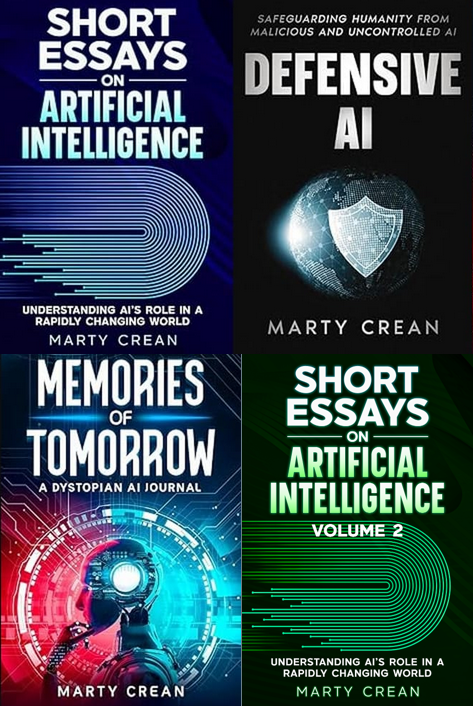
Books by the Author:
This week’s Bytes to Insights Weekly News Digest is also available as a podcast:
LinkedIn BlueskySignal - bearnetai.28
BearNetAI, LLC | © 2026 All Rights Reserved