Bytes to Insights: Weekly News Digest for the Week of April 26th, 2026

Welcome to Bytes to Insight for the week of April 26th, 2026, where we discuss the latest breakthroughs and trends in artificial intelligence.
This week reflected a growing shift in artificial intelligence from simple conversational systems toward highly autonomous agents capable of performing complex tasks with minimal human involvement. The competition among OpenAI, Google, Anthropic, Microsoft, Meta, and emerging international players intensified dramatically as companies raced to deploy agentic AI systems into enterprise environments, cybersecurity operations, software engineering, and scientific research. One of the clearest themes of the week was that the AI industry had moved beyond the chatbot era and into a new phase focused on AI systems that can reason through long workflows, use tools, interact with software environments, and collaborate with other AI agents.
OpenAI drew major attention during the week following the rollout of GPT 5.5 and its broader push into enterprise AI agents. The company emphasized systems designed to automate complex software development and cybersecurity tasks rather than simply generating text responses. Reports highlighted OpenAI’s new Daybreak initiative, which aimed to proactively identify software vulnerabilities, simulate attacks, and help organizations secure their systems before malicious actors could exploit weaknesses. This represented another step toward AI systems functioning as operational digital coworkers rather than passive assistants.
Anthropic continued gaining momentum throughout the week and was increasingly viewed as a major challenger to OpenAI’s leadership position. Claude Opus 4.7 received significant attention for its coding and enterprise capabilities, while Anthropic’s broader strategy centered around multi agent collaboration systems capable of handling large software engineering and cybersecurity workflows. Industry analysts noted that Anthropic had become particularly strong in enterprise adoption, with large corporations increasingly integrating Claude into internal operations. Discussions during the week suggested that Anthropic’s focus on safety, reasoning depth, and workplace integration was resonating strongly with businesses seeking practical AI deployment rather than purely consumer oriented products.
Google also demonstrated that it remained a formidable competitor in the AI race, especially within enterprise infrastructure and cloud integration. At Google Cloud Next, the company showcased how Gemini and DeepMind technologies were being integrated into practical business and analytics workflows. Google emphasized governance, interoperability, and enterprise management tools designed to help companies deploy multiple AI models securely and efficiently. Rather than competing solely on raw model performance, Google appeared focused on positioning itself as the backbone infrastructure provider for enterprise AI adoption.
Another major theme during the week was the explosive growth of AI driven cybersecurity. Governments and corporations increasingly viewed frontier AI models as both defensive tools and potential national security risks. Reports described how AI systems were now capable of identifying previously unknown software vulnerabilities at unprecedented speed. At the same time, researchers warned that malicious actors were using advanced AI models to scale cyberattacks, automate malware development, and improve phishing and intrusion campaigns. The growing dual use nature of frontier AI became one of the dominant conversations of the week, with many experts warning that the line between defensive and offensive AI capabilities was becoming increasingly blurred.
The labor impact of AI also became more visible during this period. Meta and Microsoft reportedly carried out substantial workforce reductions while simultaneously reinvesting heavily into AI infrastructure and automation systems. Analysts increasingly described AI as shifting from a productivity enhancement tool into a direct replacement for some categories of operational work. Discussions about economic restructuring, workforce reskilling, and long term labor displacement accelerated as companies openly acknowledged that AI efficiency gains were beginning to alter hiring and staffing strategies.
Infrastructure expansion remained another dominant topic. Technology companies continued pouring enormous resources into compute capacity, data centers, and alternative energy sources needed to sustain AI growth. Industry observers noted that the scale of infrastructure investment now rivaled major industrial transformations of the past. Companies increasingly explored nuclear energy partnerships and advanced power generation strategies to support rapidly expanding AI workloads, signaling that AI infrastructure itself had become a critical geopolitical and economic priority.
International competition also intensified. China remained highly active in AI development and regulation, particularly regarding national security concerns around advanced AI technologies and acquisitions. Discussions surrounding Meta’s blocked Manus acquisition highlighted how AI firms and governments were increasingly treating advanced AI systems as strategic national assets rather than conventional technology products. This reflected a broader global trend in which AI development was becoming deeply intertwined with geopolitics, industrial policy, and national security planning.
Overall, the week of April 26th, 2026, reinforced the growing perception that artificial intelligence was entering a new operational phase. AI systems were no longer being viewed merely as tools for generating content or answering questions. Instead, they were increasingly being designed to act autonomously, manage workflows, coordinate with other systems, and operate directly inside real world digital environments. The implications for cybersecurity, labor markets, enterprise operations, government policy, and global competition became more apparent with each passing week, signaling that the AI race was accelerating not only technologically, but economically and geopolitically as well.
Support BearNetAI
BearNetAI exists to make AI understandable and accessible. Aside from occasional book sales, I receive no other income from this work. I’ve chosen to keep BearNetAI ad-free so we can stay independent and focused on providing thoughtful, unbiased content.
Your support helps cover website costs, content creation, and outreach. If you can’t donate right now, that’s okay. Sharing this post with your network is just as helpful.
Thank you for being part of the BearNetAI community.
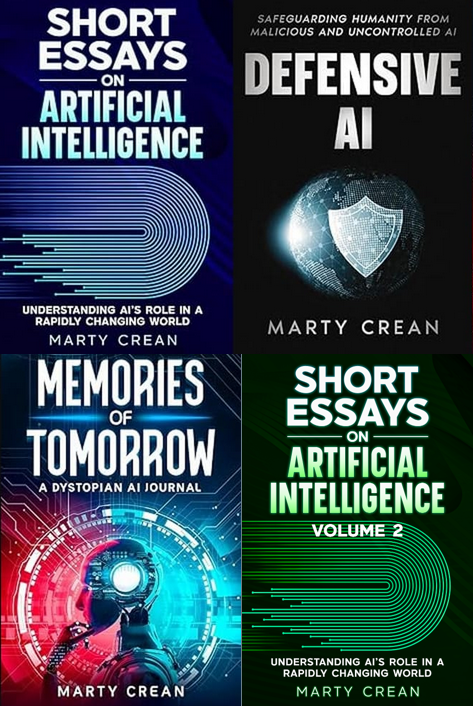
Books by the Author:
This week’s Bytes to Insights Weekly News Digest is also available as a podcast:
LinkedIn BlueskySignal - bearnetai.28
BearNetAI, LLC | © 2026 All Rights Reserved