Bytes to Insights: Weekly News Digest for the Week of December 14, 2025

The global AI landscape continued to accelerate with both technological breakthroughs and expanding strategic commitments from governments and industry leaders. OpenAI made headlines with the release of its latest flagship model, GPT-5.2, which launched in early December with improved reasoning, reduced errors, and expanded capabilities for complex tasks spanning professional work, coding, and creative applications. This release intensified competition with other leading models and reinforced the pace of advancement in foundational generative AI systems.
Major tech companies and governments are increasingly positioning AI at the center of future scientific and economic progress. In the United States, the Department of Energy has signed collaborative agreements with a wide range of technology partners to leverage AI for scientific research, advancing work in areas such as quantum computing, robotics, and energy systems. This initiative reflects a broader recognition of AI as critical infrastructure for national priorities. Meanwhile, industry partnerships and investments in AI infrastructure also influenced markets, with companies such as UiPath seeing strong growth tied to strategic AI partnerships and investors watching closely as AI became central to enterprise automation growth.
The hardware and open-source ecosystems powering AI also saw noteworthy developments. Nvidia expanded its footprint in the open-source space with the acquisition of SchedMD, a key provider of scheduling tools that optimize large-scale computing resources that are essential for AI training and inference. Universities and research labs invested in next-generation compute platforms to deepen their research capabilities in large language model inference and related fields.
AI’s influence is being felt across diverse sectors beyond tech, with new applications emerging in healthcare, construction, and robotics. Healthcare providers are integrating AI into clinical workflows to detect complex medical conditions earlier and more accurately, while construction and engineering sectors are adopting AI tools to improve safety and efficiency in project execution. At public events and academic conferences, experts discussed responsible AI adoption and integration into education systems, highlighting AI's accelerating role in shaping global workforce and research priorities.
AI has also drawn attention to societal and environmental challenges. Studies released this week highlighted the substantial carbon footprint and water usage associated with data centers powering AI operations, driving calls for greater sustainability and transparency from the industry. At the same time, sentiment varied at robotics summits where progress in humanoid robots driven by AI was on display, but experts cautioned that practical deployment remains complex and distant.
Cultural recognition of AI’s impact was also evident, with significant media outlets acknowledging influential individuals and groups shaping the technology’s trajectory, underscoring how AI has moved from a niche innovation to a central force in global technological evolution.
OpenAI launched GPT-5.2 on December 11th, positioning it as the company's most advanced model yet for professional knowledge work. The release came in three variants, each targeted at a different use case. GPT-5.2 Instant offers speed-optimized performance for routine queries, while GPT-5.2 Thinking excels at complex, structured work such as coding and document analysis. The top-tier GPT-5.2 Pro delivers maximum accuracy for complex problems. According to OpenAI, the model achieved a new benchmark on GDPval, a test measuring knowledge work tasks across 44 occupations, with GPT-5.2 Thinking beating or tying top industry professionals on more than 70 percent of comparisons. The company emphasized improvements in spreadsheet creation, presentation building, code generation, and long-context understanding. OpenAI also released GPT-5.2-Codex, an explicitly optimized agentic coding model that claims to have reached a score of 56.4 percent on the SWE-Bench Pro benchmark, surpassing all other coding models. The Codex variant includes enhanced cybersecurity capabilities, raising both opportunities for defensive security work and questions about dual-use risks.
Google released an upgraded version of Gemini Deep Research powered by its Gemini 3 Pro model. The reimagined research agent represents a shift from a specialized report-writing assistant to a full autonomous researcher capable of conducting long-form reasoning and complex analysis. Google emphasized that the agent uses multi-step reinforcement learning to autonomously navigate information landscapes, formulating queries, reading results, identifying knowledge gaps, and searching again iteratively. The company made the agent available to developers through its new Interactions API. It announced plans to integrate it across consumer services, including Google Search, Google Finance, the Gemini App, and NotebookLM. On benchmarks, the updated Deep Research achieved 46.4 percent on Humanity's Last Exam, 66.1 percent on the newly open-sourced DeepSearchQA benchmark, and 59.2 percent on BrowseComp. Google also introduced visual capabilities that allow the agent to generate charts, diagrams, animations, and simulations within research reports, though this feature initially launched only for AI Ultra subscribers.
Disney and OpenAI announced a landmark partnership on December 11th that brings more than 200 Disney, Marvel, Pixar, and Star Wars characters to OpenAI's Sora video generator and ChatGPT Images. The three-year licensing agreement allows users to create short videos featuring iconic characters such as Mickey Mouse, Cinderella, Captain America, and Darth Vader. However, it explicitly excludes likenesses and voices of talent. Disney is making a one-billion-dollar equity investment in OpenAI and will become a major customer, using OpenAI's APIs to build new products and experiences, including Disney+. The agreement includes just one year of exclusivity, after which Disney can license its intellectual property to other AI companies. The partnership drew mixed reactions, with some viewing it as a pragmatic embrace of AI technology and others criticizing it as a betrayal of creative workers. CEO Bob Iger defended the deal as respecting and valuing creativity while providing a license fee, though details about how fees would be distributed remained unclear.
President Trump signed an executive order on December 11th seeking to establish a single national framework for AI regulation and override state-level rules. The order directs the Department of Justice to create an AI Litigation Task Force to challenge state laws because they unconstitutionally regulate interstate commerce, are preempted by federal regulations, or are otherwise unlawful. It also instructs the Commerce Department to identify state AI laws that conflict with the administration's lighter-touch regulatory approach and to potentially withhold federal broadband funding from states with disfavored AI laws. The order characterizes state-by-state regulation as creating a patchwork that makes compliance challenging for startups and claims some state laws require embedding ideological bias in models. White House AI advisor David Sacks stated the administration would not push back on child safety regulations but would challenge the most onerous examples of state regulation. The order faces near-certain legal challenges, with critics arguing that the administration lacks authority to restrict state regulation without congressional legislation and expressing concern that it could create uncertainty, allowing companies to evade accountability.
Anthropic announced on December 18th a significant expansion of its Agent Skills technology, releasing the Agent Skills specification as an open standard and launching organization-wide management tools for enterprise customers. The company introduced a directory of partner-built skills from companies including Atlassian, Figma, Canva, Stripe, Notion, and Zapier. The Skills framework allows users to teach Claude how to perform specific tasks by adding files and folders that describe processes, enabling more autonomous task completion without requiring model fine-tuning. Notably, OpenAI has quietly adopted a structurally identical architecture in ChatGPT and its Codex CLI tool, suggesting industry convergence on this approach. Anthropic's internal research found that its engineers used Claude in 60 percent of their work, achieving a 50 percent self-reported productivity boost. The company also joined with OpenAI and Block to donate projects to the Linux Foundation's new Agentic AI Foundation, which aims to standardize AI agent development and prevent fragmentation into incompatible systems.
A sobering assessment of AI progress emerged from MIT Technology Review on December 15th, characterizing 2025 as a year of hype correction. The article highlighted research showing that 95 percent of businesses that tried AI found it had no value, though the study's narrow definition of success drew criticism. Another study found that AI agents from leading companies failed to complete many straightforward workplace tasks independently, falling far short of predictions that agents would materially change company output in 2025. The piece noted that while large language models have proven very good at learning specific tasks, they struggle to understand underlying principles, challenging the notion that they represent a path to artificial general intelligence. Even former OpenAI chief scientist Ilya Sutskever acknowledged these limitations. The article suggested that while LLM capabilities may be plateauing, other AI approaches and applications continue advancing.
Market sentiment around AI showed signs of strain during the week, with Bloomberg reporting on December 14th that Wall Street is increasingly debating whether to reduce AI exposure ahead of a potential bubble or double down on transformative technology. Nvidia shares experienced a selloff, Oracle plunged after reporting mounting AI spending, and sentiment around companies exposed to OpenAI soured. Investors are positioning for 2026 with growing skepticism about whether the massive investments in AI infrastructure and development will translate into sustainable returns.
Anthropic also faced scrutiny over a research finding that as few as 250 malicious documents can create a backdoor vulnerability in large language models, regardless of model size or training data volume. The joint study with the Alan Turing Institute and UK AI Security Institute revealed it's easier to poison AI training data than previously thought, though the company noted that attackers still face significant challenges in accessing training datasets and designing attacks that survive post-training defenses.
Accenture announced on December 9th a significant expansion of its partnership with Anthropic, forming the Accenture Anthropic Business Group with approximately 30,000 professionals receiving training on Claude. The partnership focuses on helping enterprises transition from AI pilots to full-scale deployment, with initial solutions targeting regulated industries such as financial services, healthcare, and life sciences. The collaboration includes making Claude Code available to tens of thousands of Accenture developers and launching a joint offering for CIOs to measure value and scale AI-powered software development.
The week's developments underscored the AI industry's paradoxical moment. Companies are releasing increasingly capable models and forming significant partnerships while simultaneously confronting questions about practical value delivery, appropriate governance, and whether current approaches can achieve the transformative goals they've promoted. Innovation between rapid innovation and meaningful oversight remains unresolved as technology becomes more deeply embedded in business operations and consumer products.
Support BearNetAI
BearNetAI exists to make AI understandable and accessible. Aside from occasional book sales, I receive no other income from this work. I’ve chosen to keep BearNetAI ad-free so we can stay independent and focused on providing thoughtful, unbiased content.
Your support helps cover website costs, content creation, and outreach. If you can’t donate right now, that’s okay. Sharing this post with your network is just as helpful.
Thank you for being part of the BearNetAI community.
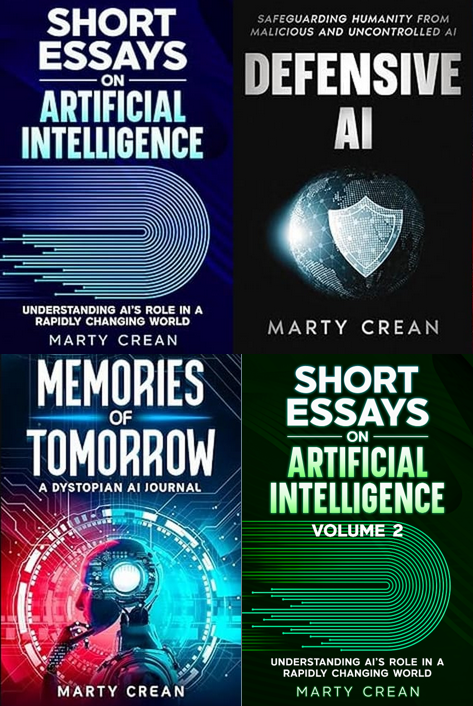
Books by the Author:
This week’s Bytes to Insights Weekly News Digest is also available as a podcast:
LinkedIn BlueskySignal - bearnetai.28
BearNetAI, LLC | © 2025 All Rights Reserved