Bytes to Insights: Weekly News Digest for the Week of December 21, 2025

AI has evolved beyond a research topic into a force reshaping industries and public life. Leading AI labs continued to push the boundaries of what models can do with new releases and upgrades. OpenAI rolled out enhanced imaging capabilities for its ChatGPT platform, delivering faster, more reliable outputs, reflecting broader trends toward richer multimodal AI tools. Anthropic moved the industry toward more interoperable AI agents by publishing open standards for agent behavior, a step that could make automation more seamless across platforms. Meanwhile, governments and national institutions broadened access to high-performance computing resources, signaling that strategic investment in AI infrastructure remains a priority in many countries.
Healthcare systems in England began deploying machine learning tools to forecast emergency department demand, helping hospitals allocate staff and beds more efficiently during a difficult winter season. Scientific research has seen notable breakthroughs in autonomous AI systems capable of designing and executing experiments, drastically reducing the time required for complex laboratory tasks. Researchers also unveiled new analytical AI that can simplify extremely complex biological systems, deepening our understanding of cancer and other intricate phenomena.
Public discourse around AI continued to grapple with both opportunity and risk. Prominent figures warned that advancing AI capabilities could lead to substantial job displacement, comparing the transformation to past industrial revolutions. At the same time, debates intensified over regulatory frameworks for emotionally interactive AI systems, with some nations proposing draft rules to govern how these technologies engage with humans and protect mental well-being. National leaders and industry voices also emphasized strategic competition in the global AI landscape, calling for domestic model development and infrastructure to defend economic and data sovereignty.
Major technology companies consolidated their positions in the AI race with acquisitions and strategic partnerships aimed at scaling infrastructure and inference technologies. Across sectors, commentators noted that 2025 may have been the year that tempered earlier hype with a more sober assessment of AI’s role in society, highlighting fundamental advances alongside emerging concerns about sustainability and societal impact. The cumulative effect of these developments portrayed a technology that is deeply integrated into scientific discovery, healthcare, commerce, geopolitics, and everyday life, promising even more profound shifts in the year ahead.
The National Institute of Standards and Technology announced a $20 million partnership with MITRE Corporation to establish two new centers focused on advancing AI applications in American manufacturing and cybersecurity for critical infrastructure. Deputy Secretary of Commerce Paul Dabbar positioned this initiative as a key step toward harnessing AI to increase manufacturing competitiveness and attract investment, building on recommendations from the White House's AI Action Plan released earlier in the year.
The financial markets reflected growing unease about the massive capital commitments driving the AI boom. Major stock indices, including the Dow Jones and the S&P 500, declined as investor anxiety about an emerging AI bubble intensified throughout the week. Deutsche Bank analysts highlighted that hyperscalers are projected to spend a cumulative $4 trillion on AI data centers through 2030, while Goldman Sachs reported that AI-related debt issuance in the U.S. credit market crossed $200 billion in 2025, more than doubling from the previous year and representing 30 percent of total credit market supply. Bank of America estimated that companies are chasing $1 trillion in incremental revenues over the next five years. Still, the gap between these enormous expenditures and demonstrated returns on investment continued to widen. The situation was particularly stark given that widely cited research from MIT found 95 percent of enterprises still weren't seeing ROI from their AI implementations.
Google consolidated its position while OpenAI faced threats from multiple directions. Google ended 2025 in a remarkably stronger position than where it began the year, with its Gemini 3 models achieving breakthrough performance across various benchmarks and the company's AI user base expanding faster than OpenAI's ChatGPT. Monthly active user penetration data showed Gemini climbing from 24 percent in July to 26 percent in October, while ChatGPT slipped from 36 percent to 35 percent during the same period. The search giant also made significant inroads in the chip market, with Anthropic announcing plans to use up to one million of Google's Tensor Processing Units, and reports emerging of negotiations with Meta to adopt the chips as well. OpenAI CEO Sam Altman declared an internal emergency, acknowledging in a podcast interview that the company had entered such situations multiple times during the year and expected to continue doing so as competition intensified.
The consulting firm Challenger, Gray & Christmas, reported that artificial intelligence was responsible for almost 55,000 layoffs across the United States in 2025, contributing to total job cuts that topped 1.17 million for the year. Amazon led the way with 14,000 corporate roles eliminated in October, its largest layoff round in history, as the company reorganized to focus on what it termed its biggest bets, including AI. Microsoft cut approximately 15,000 positions throughout the year, with CEO Satya Nadella writing about reimagining the company's mission for a new era in which AI enables everyone to create their own tools. Salesforce confirmed it would cut 4,000 customer support workers with AI assistance, while CrowdStrike attributed layoffs of 500 employees directly to AI, which its CEO called a force multiplier throughout the business. The pattern revealed AI simultaneously driving workforce reductions while requiring massive infrastructure investments.
The infrastructure supporting AI development faced unexpected market dynamics, with several component suppliers dramatically outperforming Nvidia despite the chip giant's continued dominance. Lumentum shares more than quadrupled during 2025, while Celestica, Western Digital, Seagate, and Micron all tripled in value. The memory sector experienced particularly acute constraints as AI servers consumed massive amounts of high-bandwidth memory, leading to a worldwide shortage that drove prices sharply higher. Micron executives described being more than sold out of memory chips, with the company even shuttering its consumer-focused product lines to preserve supply for AI applications. Morgan Stanley analysts characterized Micron's results as showing the best revenue and profit upside in the U.S. semiconductor industry's history, aside from Nvidia itself. The fiber-optic cable maker Celestica reported 28 percent sales growth to $3.19 billion in the third quarter, with analysts projecting revenue increases accelerating to 33 percent in 2026 and 34 percent in 2027.
A significant theme emerging late in the week centered on efficiency and cost reduction as the next phase of AI development. Former Facebook Chief Privacy Officer Chris Kelly argued that the industry would need to pivot toward creating efficiencies in training AI models as data center demand surged. The sector had accumulated over $61 billion in infrastructure dealmaking during 2025 as hyperscalers rushed into what analysts described as a global construction frenzy. Still, concerns mounted about power consumption and grid capacity. Kelly pointed out that human brains consume 20 watts and questioned whether gigawatt power centers were vital for reasoning. These concerns intensified after reports that Chinese company DeepSeek had trained competitive models for under $6 million, a figure dramatically lower than U.S. competitors and suggesting that alternative approaches to scaling might prove viable.
The payments industry prepared for what executives described as the next major shift in commerce by developing agentic AI systems capable of discovering products, comparing prices, and completing purchases on behalf of consumers. Both Visa and Mastercard announced they were racing to build the infrastructure for this evolution, with Mastercard's executive vice president describing the transition from brick-and-mortar to e-commerce now giving way to a shift from e-commerce to agentic commerce. Visa launched its Trusted Agent Protocol in October, using cryptographic authentication to distinguish authorized AI agents from malicious bots, while both companies worked on developing specialized tokens and payment signals to enable secure agent-initiated transactions. Amazon began testing its Buy For Me feature while simultaneously working to block external AI agents from crawling its website, reflecting merchant concerns about potentially losing direct access to customers and facing new price pressures.
Manufacturing emerged as a sector beginning to realize practical benefits from agentic AI deployment beyond traditional automation. Toyota's partnership with AWS and Deloitte produced measurable results, including roughly 20 percent improvement in forecast accuracy and 18 percent increase in planner productivity, while reducing reliance on spreadsheet-driven coordination. The company redesigned its supply chain planning processes to use AI to generate recommendations, simulate scenarios, and continuously learn from outcomes, rather than simply layering AI onto existing workflows. Industry publications highlighted how agentic systems distinguished themselves from earlier automation by learning from data and adapting to changing conditions with minimal human intervention, allowing factories to rebalance workloads, reroute production around bottlenecks, and service equipment before failures occurred.
The Federal Reserve signaled it was incorporating expectations of increased labor productivity from AI adoption into its economic forecasts and policy considerations. Chair Jerome Powell addressed the topic at his December press conference, noting that in past technological waves, there had always been more work created with higher productivity and rising incomes, though acknowledging uncertainty about how the current AI wave would unfold. Research from National Bureau of Economic Research economists modeling various AI development scenarios suggested that, over many decades in an unbounded-growth scenario, labor productivity could increase by as much as three to four times, while 23 percent of workers might lose their jobs. Over the next decade, the researchers projected labor productivity increases of roughly 7% per year, though they emphasized that these were hypothetical scenarios that might not materialize as modeled.
Concerns about AI capabilities and their potential misuse received prominent attention when Geoffrey Hinton, widely known as the godfather of artificial intelligence, stated in a CNN interview that he felt more worried about AI risks than he had two years earlier when he left Google to speak freely about the technology's dangers. Hinton's renewed warnings came as the industry confronted evidence of the proliferation of AI-generated content, with AI video tools like Sora now capable of placing real people in completely fake situations. Reports of fake videos of people stuffing ballot boxes and fabricated local news interviews have spread across social media platforms, highlighting the growing challenge of distinguishing authentic content from AI-generated material.
Fundamental limitations might constrain the scaling approach that has driven recent AI progress. BBC Science Focus reported that prominent investors, including Peter Thiel's hedge fund and Michael Burry, were taking positions against Nvidia despite its extraordinary run, reflecting concerns that something in the AI growth story might be fraying. The scaling laws that had suggested larger models would continue delivering proportional improvements appeared to be breaking down, with researchers noting that a comfortable majority of AI experts now agreed that simply scaling current approaches wouldn't yield artificial general intelligence. The push for ever-larger models carried an astronomical price tag, with training costs for cutting-edge models potentially reaching $10 billion or more while consuming massive amounts of electricity. Training GPT-3 required an estimated 1,287 megawatt-hours, enough to power 120 U.S. homes for a year, and subsequent models required orders of magnitude more power.
The National Oceanic and Atmospheric Administration announced the deployment of a new generation of global weather models powered by artificial intelligence, designed to significantly improve the accuracy and speed of atmospheric predictions. By integrating machine learning with traditional physics-based modeling, NOAA aimed to provide better lead times for extreme weather events and more precise data for emergency responders. Researchers at the University of Michigan developed an AI model capable of diagnosing coronary microvascular dysfunction using only a standard 10-second EKG strip, a form of heart disease previously requiring advanced imaging or invasive procedures to identify. Other researchers used AI to design a novel molecule that significantly enhanced the effectiveness of chemotherapy in treating pancreatic cancer by targeting specific resistance mechanisms in tumor cells.
The Department of Defense concluded its Scarlet Dragon exercise, a joint military-industry initiative that tested real-world battlefield applications of artificial intelligence, focused on accelerating the kill chain through rapid target identification and data sharing across military branches. The exercise reflected the Pentagon's continuing investment in AI capabilities for operational advantage, though details of specific outcomes remained limited in public reporting. DoorDash introduced Zesty, an AI-powered social application designed to transform restaurant discovery by utilizing generative AI to curate personalized recommendations based on social trends, user preferences, and real-time dining data, marking a shift beyond traditional delivery services.
Fortune's industry analysts predicted that 2026 would be a decisive year for AI adoption as businesses moved beyond experimentation toward demonstrating a return on investment. The publication noted that while 2025 had been dominated by discussions of agentic AI and rapid rollouts of new capabilities, the coming year would likely see increased pressure on companies to demonstrate tangible business results from their AI investments. The competitive dynamics remained fluid with open-source models, particularly from Chinese developers, continuing to close performance gaps with proprietary frontier models while operating at substantially lower costs, potentially reshaping the economics of AI development and deployment across the industry.
Support BearNetAI
BearNetAI exists to make AI understandable and accessible. Aside from occasional book sales, I receive no other income from this work. I’ve chosen to keep BearNetAI ad-free so we can stay independent and focused on providing thoughtful, unbiased content.
Your support helps cover website costs, content creation, and outreach. If you can’t donate right now, that’s okay. Sharing this post with your network is just as helpful.
Thank you for being part of the BearNetAI community.
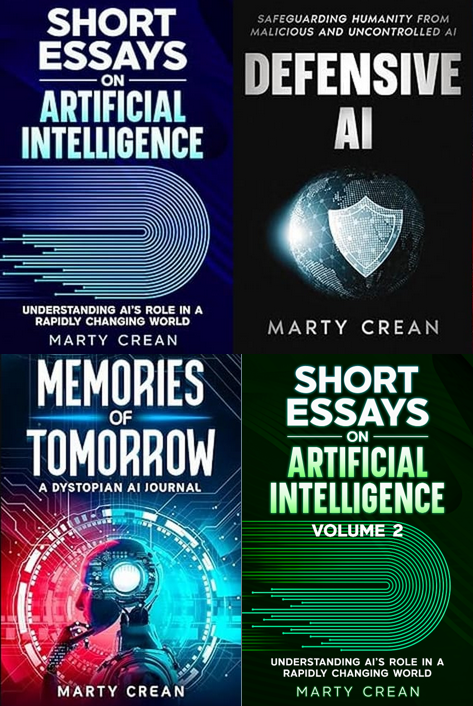
Books by the Author:
This week’s Bytes to Insights Weekly News Digest is also available as a podcast:
LinkedIn BlueskySignal - bearnetai.28
BearNetAI, LLC | © 2025 All Rights Reserved