Bytes to Insights: Weekly News Digest for the Week of December 7, 2025

Cloud and enterprise technology continued to chart the course for AI integration into business operations as Amazon Web Services showcased new high-performance computing and agent frameworks at its annual conference, and major vendors like IBM and AWS pushed autonomous AI agents deeper into corporate workflows. Analysts observed intensifying competition between the largest AI developers, with Google advancing its Gemini platform and previewing new text and speech models that emphasize natural expressive capabilities for developers to test.
Governments and institutions also shaped the AI landscape, with South Korea mandating labeling of AI-generated advertising content to protect consumers from deceptive material, reflecting broader concerns about the societal impacts of AI. In Europe, Google’s DeepMind announced plans to build an automated scientific research lab focused on materials science, part of a partnership that gives local scientists access to cutting-edge tools and positions AI as a driver of national research infrastructure.
The growing geopolitical and economic weight of AI as a Middle Eastern joint venture launched a multibillion-dollar initiative to build AI infrastructure in the Gulf region, and media recognition of AI’s influence expanded with Time naming key AI leaders as its Person of the Year. Alongside these advances, expert commentary underscored both the benefits of rapid AI progress in fields such as healthcare and climate science and the mounting risks posed by increasingly capable systems, urging that safety and governance frameworks keep pace with technological leaps.
OpenAI emerged from what CEO Sam Altman had described as a "code red" moment by launching GPT-5.2 on December 11th, positioning it as the company's most capable model for professional knowledge work and complex reasoning tasks. The release came less than a month after GPT-5.1 and was driven by accelerated timelines due to competitive pressure from Google's recently launched Gemini 3. The new model comes in three variants designed for different use cases: Instant for routine queries, Thinking for complex, structured work such as coding and document analysis, and Pro for maximum accuracy on complex problems. OpenAI claims GPT-5.2 achieves performance at or above expert human levels on knowledge work tasks spanning 44 occupations, matching or exceeding top professionals in roughly 71 percent of comparisons according to expert judges. The model demonstrates strength in coding benchmarks, mathematical reasoning, and long-context understanding, with the company reporting 38 percent fewer errors compared to its predecessor. Beyond raw performance metrics, the strategic significance lies in how OpenAI is positioning itself for enterprise adoption, targeting developers and the tooling ecosystem as it seeks to become the default foundation for AI-powered applications.
On December 11th, President Trump signed an executive order seeking to establish a single national framework for artificial intelligence regulation while limiting individual states' ability to pass their own AI laws. The order directs the Justice Department to create an AI Litigation Task Force with the sole responsibility of challenging state AI laws deemed inconsistent with the administration's policy. It also instructs federal agencies to evaluate whether states with what it calls "onerous AI laws" should be ineligible for specific federal funding, including rural broadband grants under the Broadband Equity Access and Deployment program. The administration's position holds that state-by-state regulation creates a patchwork of 50 different regulatory regimes that make compliance challenging, particularly for startups, and that some state laws may require AI models to produce biased or false results to avoid differential impacts on protected groups—the executive order specifically singles out Colorado's recently passed AI anti-discrimination law as problematic. The move has generated fierce opposition from across the political spectrum, with critics arguing that the executive order amounts to federal overreach and removes essential consumer protections. Several states have indicated they will challenge the order in court, and legal experts suggest it faces substantial constitutional hurdles since executive orders cannot preempt state laws without congressional action. The debate highlights a fundamental tension in AI governance between those who prioritize rapid innovation and global competitiveness versus those concerned about accountability and protection from potential harms.
Disney announced a landmark three-year licensing agreement with OpenAI, making the entertainment giant the first major content partner on Sora, OpenAI's video generation platform. Under the deal, Disney is investing one billion dollars in OpenAI and gaining warrants to purchase additional equity, while allowing Sora users to create short social videos featuring more than 200 animated and creature characters from Disney, Marvel, Pixar, and Star Wars properties. Users will be able to generate content featuring iconic figures such as Mickey Mouse, Ariel, Simba, Captain America, and Darth Vader. However, the agreement explicitly excludes any likeness or voices of talent. A curated selection of these user-generated videos will be made available to stream on Disney+. Disney will also become a major customer of OpenAI more broadly, using its APIs to build new products and tools, including for Disney+, and deploying ChatGPT across its workforce. The deal represents a significant strategic shift for Disney, which has historically been fiercely protective of its intellectual property while simultaneously pursuing copyright infringement cases against other AI companies. On the same day that Disney announced the OpenAI partnership, Disney reportedly sent a cease-and-desist letter to Google, alleging massive-scale copyright infringement. The partnership reflects Disney's calculation that working with select AI companies under controlled licensing agreements may be preferable to fighting an endless series of legal battles, while also positioning itself to capitalize on generative AI rather than being disrupted by it.
Anthropic and Accenture announced on December 9th a significant expansion of their partnership, creating the Accenture Anthropic Business Group. The collaboration will see approximately 30,000 Accenture professionals receive training on Anthropic's Claude models and Claude Code, representing one of the largest deployments of enterprise AI expertise being built in the industry. Accenture becomes a premier partner for Claude Code and will make the coding tools available to tens of thousands of its developers, with the companies jointly developing offerings specifically designed for chief information officers to measure value and scale AI-powered software development across their organizations. The partnership will initially focus on highly regulated industries, including financial services, life sciences, healthcare, and the public sector, where organizations face the dual challenge of modernizing legacy systems while maintaining strict security and governance requirements. The announcement comes as data show that Anthropic has grown its enterprise market share from 24 percent to 40 percent, with strong traction in AI coding, where it holds 54 percent of the market. The collaboration includes co-investment in a Claude Center of Excellence. It brings Claude into Accenture's network of Innovation Hubs, which will serve as controlled environments where Global 2000 clients can prototype and validate AI solutions before enterprise-wide deployment.
French AI startup Mistral continued its aggressive push into enterprise markets with a dual announcement on December 9th and 10th. The company launched Devstral 2, a 123-billion-parameter model optimized for advanced coding tasks, alongside Devstral Small 2, a more compact 24-billion-parameter variant designed to run on consumer hardware such as standard laptops. The release positions Mistral as offering an alternative to proprietary coding systems from larger competitors, with the company emphasizing that Devstral 2 achieves performance comparable to leading proprietary models while undercutting costs by approximately 85 percent. Mistral also introduced Mistral Vibe, a command-line interface that allows developers to execute complex coding tasks using natural language prompts while maintaining persistent conversation history and context awareness. The launches followed Mistral's December 2nd release of the Mistral 3 family, which included both a large frontier model, Mistral Large 3, with multimodal and multilingual capabilities, and nine smaller models designed to run on edge devices, including drones, robots, and smartphones without network connectivity. The strategy reflects Mistral's positioning as the European champion of open-weight AI models, seeking to provide developers with alternatives to the increasingly closed ecosystems being built by American tech giants.
The week revealed a broader pattern of AI systems transitioning from experimental tools to production infrastructure across industries. The focus has shifted from demonstrating what AI can do to measuring return on investment and building the organizational capabilities needed for large-scale deployment. Major corporations are increasingly treating AI literacy as essential workforce training rather than specialized technical knowledge, with consulting firms and AI labs forming partnerships explicitly designed to train tens of thousands of professionals on AI systems. The competitive dynamics among leading AI labs continue to intensify, with companies releasing new models at an accelerated pace and engaging in increasingly public benchmarking battles. Yet questions about governance, safety, and societal impact remain largely unresolved, as evidenced by the stark disagreements over whether federal or state authorities should regulate AI development and deployment. Regulatory uncertainty creates challenges for organizations trying to implement AI responsibly while remaining competitive in a global race in which other nations may operate under fewer constraints. As AI capabilities advance and deployment accelerates, the tension between innovation and appropriate oversight will likely remain a defining characteristic of the technology's evolution.
Support BearNetAI
BearNetAI exists to make AI understandable and accessible. Aside from occasional book sales, I receive no other income from this work. I’ve chosen to keep BearNetAI ad-free so we can stay independent and focused on providing thoughtful, unbiased content.
Your support helps cover website costs, content creation, and outreach. If you can’t donate right now, that’s okay. Sharing this post with your network is just as helpful.
Thank you for being part of the BearNetAI community.
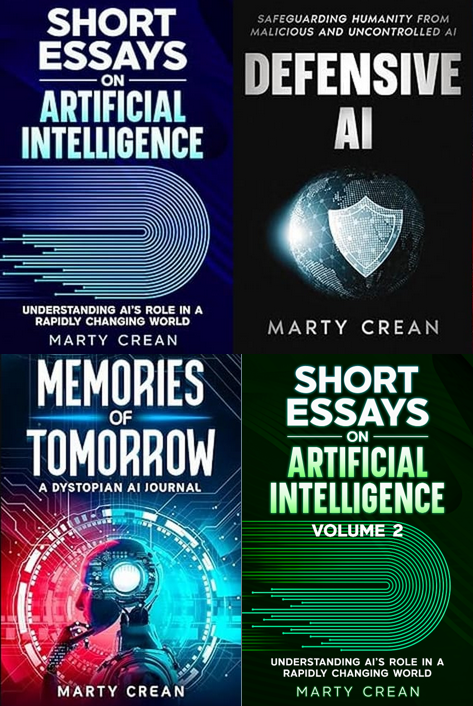
Books by the Author:
This week’s Bytes to Insights Weekly News Digest is also available as a podcast:
LinkedIn BlueskySignal - bearnetai.28
BearNetAI, LLC | © 2025 All Rights Reserved