Bytes to Insights: Weekly News Digest for the Week of January 11th, 2026

Welcome to Bytes to Insight for the week of January 11th, 2026, where we discuss the latest breakthroughs and trends in artificial intelligence.
This past week, artificial intelligence reinforced the idea that technology is rapidly moving from an experimental tool to an integral part of industry infrastructure. Major tech companies are sharpening their strategies to embed advanced AI capabilities deeply into consumer devices and services, with announcements that AI-driven features will be standard in next-generation hardware and software.
One global smartphone manufacturer revealed plans to integrate intelligent functions into essentially its entire 2026 lineup as firms race to differentiate through AI-enabled experiences. At the same time, a high-profile partnership between two tech giants was unveiled, aiming to overhaul a long-standing voice assistant by integrating more powerful generative models to enhance personalization and functionality. These moves reflect a broader competitive push to make AI a defining part of everyday technology and user interaction.
The week also saw renewed emphasis on autonomous AI systems capable of taking meaningful actions without human prompting. Several reports highlighted how agentic AI is transitioning from concept to commercial use, with tools capable of navigating complex tasks from customer engagement in retail settings to generating complete software applications from natural language prompts. In the automotive sphere, a robotics and mobility company reaffirmed its commitment to launching a fully driverless service driven by advanced AI in 2026, marking a milestone for autonomous transport. This expansion of AI capabilities beyond passive assistance toward independent operation signals a shift in how organizations are deploying machine intelligence.
Representatives from one major emerging economy emphasized international partnerships in AI at a leading global economic forum in Davos, positioning the country as a key player in future technological investment. There is also heightened awareness of the geopolitical dimensions of AI infrastructure as nations build data centers and invest in semiconductor development to support the computing demands of next-generation models.
Visionaries in tech and research are stressing AI’s dual nature, noting its potential to transform fields like healthcare while also warning of serious risks if technology is misused. Concerns about sophisticated, manipulated media and the need for better media literacy emerged amid discussion of deepfakes and misinformation. There are also ongoing debates in academic circles about long-term research directions, including the fundamentals of artificial intelligence and how best to align technical progress with ethical and societal priorities. All told, the week’s developments illustrate a field in dynamic evolution with expanding opportunities, intensifying competition, and growing calls for thoughtful governance.
Apple and Google announced a multi-year partnership that will see Google's Gemini models and cloud infrastructure powering the next generation of Apple Foundation Models. This collaboration represents a major strategic shift for Apple, which will use Gemini to power a significantly upgraded version of Siri expected to launch later in 2026. The deal follows Apple's previous integration of OpenAI's ChatGPT into Apple Intelligence, though Apple stated this existing partnership remains unchanged. Industry analysts estimate the Google agreement could be worth approximately five billion dollars annually, though official financial terms were not disclosed. The announcement sent shockwaves through the tech industry, highlighting both Google's resurgence in the AI race and Apple's continued challenges in developing competitive large language models internally despite its traditional emphasis on vertical integration.
The partnership announcement came as Apple faces mounting pressure to deliver meaningful AI capabilities after multiple delays to its promised Siri overhaul. The company originally teased major AI improvements at its 2024 developer conference but delayed the launch several times. By choosing Google's Gemini after what Apple described as a careful evaluation, the iPhone maker acknowledged that Google's technology provides the most capable foundation for its AI ambitions. The deal maintains Apple's emphasis on privacy, with the company stating that Apple Intelligence will continue to run on Apple devices and that Private Cloud Compute will continue to adhere to its industry-leading privacy standards.
Developments in Chinese AI continued to command attention. OpenAI released a blog post acknowledging that another potential disruption from China could arrive soon, with speculation building around a new major release from DeepSeek, possibly timed around the Lunar New Year in mid-February. OpenAI's analysis noted that while the United States continues to lead in model capabilities, the gap between American and Chinese AI systems has narrowed dramatically, from over a year to approximately 3 months. The company highlighted that Chinese firms now field a broad range of near-frontier models, many released as open-weight systems with aggressive pricing, making them easier to deploy across industries and government systems.
DeepSeek specifically attracted industry focus after releasing a technical paper introducing a new training framework called Manifold-Constrained Hyper-Connections. The methodology aims to improve the scalability of AI models while reducing computational and energy demands, reflecting the Chinese AI industry's broader push to compete with American rivals despite limited access to advanced Nvidia chips. Reports indicated that DeepSeek's anticipated V4 model, expected around mid-February, shows strength in coding tasks and could outperform leading competitors, including Anthropic's Claude and OpenAI's GPT series, in code generation benchmarks.
Tensions between federal and state AI governance intensified during the week. On January 14th, Michael Kratsios, director of the White House Office of Science and Technology Policy, testified before the House Science Committee's Research and Technology Subcommittee. During the hearing, Kratsios characterized state AI laws as anti-innovation and advocated for a unified national regulatory framework. The administration continued pushing its December executive order that directs federal agencies to sue states with onerous AI regulations and potentially limit their access to federal funding. Democrats pressed Kratsios on concerns about budget cuts to science agencies and the administration's aggressive stance on preempting state authority. The executive order tasks Kratsios and Special Adviser David Sacks with developing legislative recommendations for a national AI standard by early March.
Multiple state AI laws took effect on January 1st, including California's Transparency in Frontier Artificial Intelligence Act and Texas's Responsible Artificial Intelligence Governance Act, though the Trump administration's preemption effort cast uncertainty over their enforceability. The regulatory dispute reflects broader tensions between those arguing that a patchwork of state regulations will stifle innovation and hamper America's competitive position against China, and those defending state authority to protect their residents from potential AI harms.
Reports emerged that several AI models, particularly OpenAI's latest systems, successfully solved previously open mathematical problems from the Erdős problem set. Since late December, 15 problems have been moved from open to solved status, with 11 solutions specifically crediting AI models. The progress demonstrated that while AI systems remain far from fully autonomous in mathematical research, they increasingly play meaningful roles in mathematical problem-solving, particularly for problems with relatively straightforward solutions that had simply been overlooked or underexplored.
Meta announced its Meta Compute initiative to build AI infrastructure and oversee the company's global fleet of data centers and supplier partnerships in pursuit of what CEO Mark Zuckerberg described as superintelligence. The initiative reflects the tech industry's massive ongoing investments in AI compute capacity, with Goldman Sachs estimating that leading data center operators will spend over $500 billion on capital expenditure in 2026.
Microsoft addressed growing community resistance to data center expansion by promising measures designed to prevent its AI buildout from raising electricity bills or intensifying water stress in host communities. The commitment acknowledged that AI data centers have become politically sensitive, with their continuous power demands potentially socializing infrastructure upgrading costs to residential customers, even as the primary beneficiaries are large corporate customers.
Semiconductor developments included reports that Cerebras Systems was in talks to raise approximately $1 billion at a $22 billion valuation, signaling continued investor appetite for AI infrastructure companies offering alternatives to Nvidia's dominant position. AMD confirmed it would begin supplying its MI450 chips to OpenAI in the second half of 2026, expecting the agreement to generate cumulative revenue of $100 billion over several years.
The quantum computing sector saw significant movement when Equal1 announced a sixty-million-dollar funding round led by the Ireland Strategic Investment Fund. The company focuses on developing silicon-based quantum computers using standard semiconductor manufacturing processes, aiming to make quantum computing more accessible by reducing costs, power consumption, and infrastructure complexity compared to traditional quantum systems requiring exotic cooling and custom fabrication.
Financial markets reflected ongoing uncertainty about AI valuations and competitive dynamics. Anthropic reportedly aims for an initial public offering in 2026, following OpenAI's signals about a potential trillion-dollar IPO in 2026 or 2027, though the company faces financial challenges, with reported losses approaching $9 billion in 2025 despite revenues of $13 billion. Market share data showed OpenAI's enterprise large language model declining from 50% in 2023 to 25% currently, overtaking Anthropic at 32%, with Google's Gemini capturing 20% and gaining momentum.
The World Economic Forum released its 2026 Global Risks Report, identifying geoeconomic confrontation as the top near-term risk facing businesses and noting that concerns about adverse outcomes from artificial intelligence have risen faster than any other issue in its survey. The report captured growing unease about AI deployment amid geopolitical tensions and economic uncertainties.
First Amendment concerns emerged as state legislatures across the country introduced new waves of AI-related bills. Analysis from legal experts highlighted ongoing constitutional tensions, particularly around election-related deepfake legislation, with federal courts already striking down some state laws as overly restrictive of political speech. The constitutional questions reflect broader challenges in regulating expressive technologies while protecting free speech rights.
Industry observers characterized the week's developments as indicative of a broader shift in the AI sector from pure capability races toward questions of deployment, integration, and governance. The focus increasingly centers on making AI systems more reliable, efficient, and deeply embedded into real-world applications rather than simply building larger models. The industry appears to be entering what some analysts described as a transition from brute-force scaling toward more sophisticated architectures, from flashy demonstrations toward targeted practical deployments, and from promises of autonomous agents toward systems that genuinely augment human work.
Support BearNetAI
BearNetAI exists to make AI understandable and accessible. Aside from occasional book sales, I receive no other income from this work. I’ve chosen to keep BearNetAI ad-free so we can stay independent and focused on providing thoughtful, unbiased content.
Your support helps cover website costs, content creation, and outreach. If you can’t donate right now, that’s okay. Sharing this post with your network is just as helpful.
Thank you for being part of the BearNetAI community.
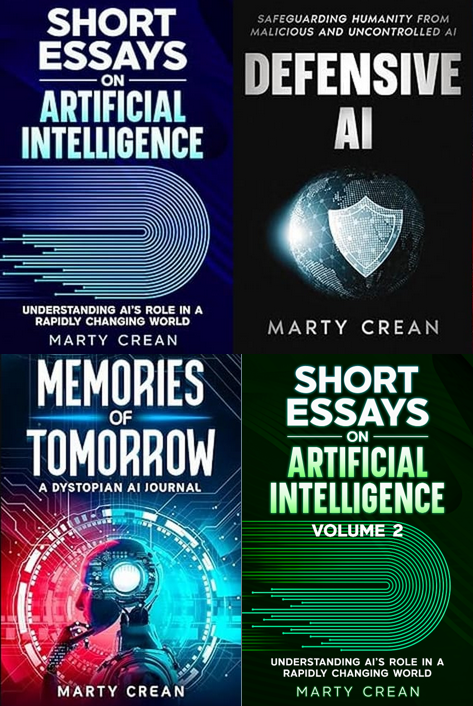
Books by the Author:
This week’s Bytes to Insights Weekly News Digest is also available as a podcast:
LinkedIn BlueskySignal - bearnetai.28
BearNetAI, LLC | © 2025 All Rights Reserved