Bytes to Insights: Weekly News Digest for the Week of January 18th, 2026

Welcome to Bytes to Insight for the week of January 18th, 2026, where we discuss the latest breakthroughs and trends in artificial intelligence.
The artificial intelligence landscape continued to evolve rapidly, driven by technological innovation and an increasing regulatory and societal focus. Major technology companies pushed the boundaries of practical AI implementation with reports indicating that advanced AI systems are being integrated into physical robotics and everyday applications. Research and deployment efforts during this period highlighted the trend toward combining natural language reasoning with physical task performance, moving beyond purely digital assistants toward embodied AI capable of real-world interaction.
Leading tech firms announced significant strategic shifts in AI hardware and software. There were developments in custom AI chip design aimed at boosting performance and efficiency for large-scale models and services, reflecting fierce competition and a push to optimize costs and capabilities for cloud-based AI products. At the same time, other research emphasized the importance of narrowing the gap between what AI systems can theoretically do and how they are adopted in sectors such as health science and enterprise, spotlighting the need for practical integration of these technologies into workflows that benefit users.
Governments and regulatory bodies also made moves that could have long-term effects on the AI field. Several regions introduced new rules and investments designed to balance innovation with accountability and national competitiveness. Some nations committed substantial public funding to AI research and talent development, while others enacted comprehensive legal frameworks requiring transparency and accountability in AI use. These efforts underscore a global acknowledgment that AI must be developed responsibly and in ways that protect public interests.
Social concerns about AI’s impact intensified. Issues around youth access to AI-generated characters prompted platforms to adjust their features, and backlash from creative communities revealed tensions over the use of generative models in media and entertainment. These reactions illustrate broader debates about how emerging AI tools affect culture, creativity, and personal well-being.
New studies demonstrated AI’s potential to contribute to understanding complex human behaviors and medical challenges. At the same time, analyses from investment and research experts signaled a cautionary note about the disconnect between investor enthusiasm and the pace of foundational AI research, suggesting that hype may outstrip substantive progress in some areas.
Chinese AI startup DeepSeek continued its momentum from early 2025 with the publication on January 13th of research introducing a new training architecture called Manifold-Constrained Hyper-Connections (mHC). This approach fundamentally rethinks how information flows through neural networks, potentially making large-language-model training significantly more efficient and stable without requiring massive computational resources. This innovation could substantially reduce pretraining costs, democratizing access to powerful AI capabilities for smaller organizations that lack the billion-dollar budgets of major tech firms. Analysts viewed the research as laying the groundwork for DeepSeek's anticipated V4 model, expected around mid-February 2026 during Lunar New Year, which may incorporate both the mHC architecture and a newly leaked conditional memory system called Engram designed to handle context windows exceeding one million tokens.
The industry's attention to training efficiency reflected broader concerns about AI's computational demands and costs. DeepSeek's approach challenged the prevailing wisdom that progress requires simply throwing more data and computing power at models. Instead, the company demonstrated that architectural innovation and smarter design could achieve comparable or superior results with dramatically fewer resources. This philosophy resonated particularly considering semiconductor supply constraints and growing scrutiny over AI infrastructure's energy consumption.
OpenAI made several strategic moves during the week. The company introduced age prediction capabilities for ChatGPT on January 20th, using account-level and behavioral signals to identify users under 18 and automatically apply content protections designed to reduce exposure to sensitive material. The feature was part of OpenAI's ongoing effort to improve ChatGPT's age-prediction capabilities on January 20th, using account-level and behavioral signals to identify users under 18 and automatically apply content protections to address safety concerns amid mounting pressure from lawmakers and regulators. Additionally, OpenAI rolled out ChatGPT Health and announced OpenAI for Healthcare, both launched on January 8th, targeting the medical sector with HIPAA-compliant tools designed to support clinical workflows, reduce administrative burden, and ground responses in medical evidence with transparent citations. Major health systems, including Memorial Sloan Kettering Cancer Center and UCSF, began deploying the enterprise version.
On January 16th, OpenAI announced plans to begin testing ads within ChatGPT for users on the free and Go subscription tiers, marking a significant shift in the company's business model. The ads would appear at the bottom of responses when relevant sponsored products or services align with ongoing conversations, clearly labeled and separated from organic content. The company emphasized that advertising would not appear to users predicted to be under 18 or near sensitive topics such as health, mental health, or politics. OpenAI's CFO, Sarah Friar, framed the initiative as necessary to sustain free access for users unwilling to pay subscriptions, while the company faces escalating infrastructure costs from massive data center investments.
Google expanded its Gemini integration across multiple platforms and products. The company introduced Personal Intelligence on January 14th, a beta feature allowing Gemini to reason across data from Gmail, Google Photos, Search, and YouTube history to provide proactively tailored responses without users needing to specify where to look. Available initially to Google AI Pro and AI Ultra subscribers in the United States, the feature remained off by default to address privacy concerns. Google simultaneously enhanced Gmail with AI Overviews powered by Gemini 3, enabling the service to synthesize entire email threads into concise summaries and answer natural-language questions about inbox content. The company also previewed new Gemini capabilities for Google TV at CES, allowing viewers to use conversational language to search content, get plot recaps, and access recommendations.
Apple announced a multiyear partnership with Google on January 12th to use Gemini models and cloud technology for future Apple Foundation Models, including a major Siri upgrade expected later in 2026. The deal represented a significant endorsement of Google's AI capabilities and marked a potential shift in the competitive landscape, though Apple maintained its existing ChatGPT integration with OpenAI, which remained unchanged. Reports suggested Apple would pay approximately $1 billion annually to use Google AI, adding to the billions Google already pays Apple to be the default search engine on iPhones.
Meta faced internal turmoil around its Llama model family. Reports emerged during the week that Yann LeCun, Meta's departing chief AI scientist and Turing Award winner, offered unusually candid criticism of the company's AI development approach. In a Financial Times interview published around January 7th, LeCun acknowledged that Meta researchers had manipulated Llama 4 benchmark testing by using different model versions on different benchmarks to improve results, rather than following the standard practice of testing a single version across all benchmarks. The admission contributed to a loss of confidence among Meta leadership, including CEO Mark Zuckerberg, prompting a major organizational overhaul that included establishing Meta Superintelligence Labs under Scale AI CEO Alexandr Wang. The company reportedly delayed its next-generation Avocado model to the first quarter of 2026 and contemplated shifting from open-source to closed-source development, marking a significant strategic pivot.
NVIDIA dominated semiconductor announcements at CES with the unveiling of its Vera Rubin platform on January 5th. The new architecture consisted of six chips including the Vera CPU, Rubin GPU, and networking and storage components, designed to deliver ten times improvement in throughput versus the Grace Blackwell platform and a ten times reduction in token costs. The integration emphasized memory capacity and bandwidth to address bottlenecks in AI reasoning tasks. AMD countered with its Helios rack-scale platform featuring 72 MI455X chips to compete directly with Nvidia's offerings, while also introducing Ryzen AI 400 processors for consumer AI PCs. Intel showcased its first chips manufactured using the company's 18A process node in North America with the Core Ultra Series 3 processors, representing a critical test of Intel's foundry ambitions and featuring enhanced neural processing capabilities for AI workloads.
The semiconductor announcements underscored the industry's recognition that memory access and bandwidth had become as critical as raw computational power for next-generation AI applications. Both Nvidia and AMD prioritized solutions integrating high-bandwidth memory and fast storage to support the massive context windows and reasoning capabilities demanded by emerging AI models. However, production faced constraints from memory shortages, with Samsung and SK Hynix prioritizing AI data center chips that generated substantially higher revenue than consumer graphics products.
Regulatory tensions escalated around state AI laws. On December 11th, 2025, President Trump signed an executive order titled Ensuring a National Policy Framework for Artificial Intelligence, proposing to establish a uniform federal AI policy that would preempt state laws deemed inconsistent with the administration's objectives. The order directed the Attorney General to establish an AI Litigation Task Force to challenge state regulations, specifically targeting Colorado's AI Act, scheduled to take effect June 30th, 2026. The administration argued that state-by-state regulation created compliance challenges and sometimes required entities to embed ideological bias within models. The executive order also directed federal agencies to withhold certain funding from states with what the administration characterized as onerous AI laws.
Multiple state AI laws nevertheless took effect on January 1st, 2026, despite the federal challenge. California implemented its Transparency in Frontier Artificial Intelligence Act, requiring large AI model developers to publish safety frameworks and provide whistleblower protections for employees reporting critical safety incidents. Texas's Responsible Artificial Intelligence Governance Act and several other state measures addressing AI transparency, automated decision-making, and algorithmic discrimination also became operative. The collision between state regulatory efforts and federal preemption attempts created significant uncertainty for companies navigating compliance obligations, with legal battles expected to unfold throughout 2026 as courts determine the extent of federal authority to override state AI regulation.
Together, these developments from January 18 reflect an AI ecosystem that is maturing quickly and diversifying across applications and governance. Technological advances continue apace even as stakeholders grapple with ethical, economic, and regulatory questions, hinting at a future in which AI is more deeply woven into the social and industrial fabric while also being more actively shaped by public policy and collective norms.
Support BearNetAI
BearNetAI exists to make AI understandable and accessible. Aside from occasional book sales, I receive no other income from this work. I’ve chosen to keep BearNetAI ad-free so we can stay independent and focused on providing thoughtful, unbiased content.
Your support helps cover website costs, content creation, and outreach. If you can’t donate right now, that’s okay. Sharing this post with your network is just as helpful.
Thank you for being part of the BearNetAI community.
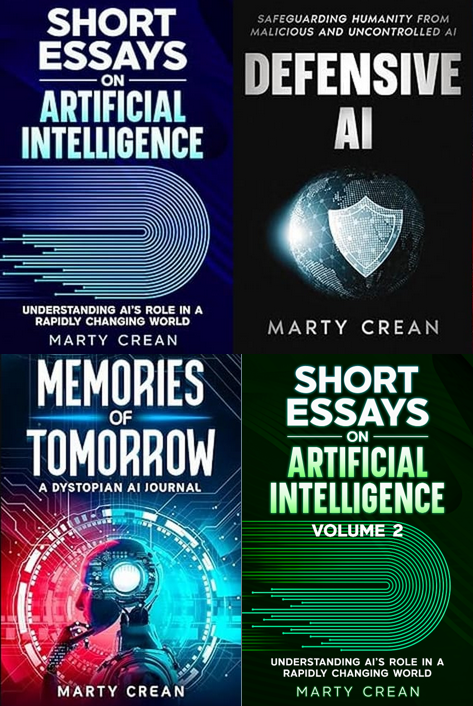
Books by the Author:
This week’s Bytes to Insights Weekly News Digest is also available as a podcast:
LinkedIn BlueskySignal - bearnetai.28
BearNetAI, LLC | © 2025 All Rights Reserved