Bytes to Insights: Weekly News Digest for the Week of June 14th, 2026

Welcome to Bytes to Insights for the week of June 14th, 2026, where we explore the latest breakthroughs and trends in artificial intelligence.
This week was not defined by a model launch or a flashy chatbot feature. Instead, it offered something quieter and more significant. Artificial intelligence is becoming central to national strategy, economic power, and global governance.
This week's developments pointed in one direction. AI companies are no longer simply tech firms. Their choices now affect science, labor, security, and international relations. For BearNetAI readers, the week sharpened the question of who governs AI once it rivals government influence.
The most telling story came from the G7 summit. Here, top AI company heads joined discussions once reserved for heads of state. Executives from OpenAI, Google DeepMind, and Anthropic addressed AI governance, security, and global coordination. It’s easy to call this theater, but symbols matter. Just a few years ago, these companies were mere vendors. Now, governments see that decisions from a handful of labs can shift economies, impact military planning, steer research, and affect the flow of information.
The point is not just that executives attended a summit. AI has grown so important that governments feel they can’t discuss its future without these companies. Historians may see moments like this as the start of shared governance where states, corporations, and international bodies shape advanced technology together.
The second story was about people, not machines. John Jumper, a principal architect of DeepMind’s AlphaFold and a 2024 Nobel laureate in Chemistry, is leaving Google DeepMind for Anthropic. The real significance is in what this move shows. The rarest resource in AI may now be limited human expertise, not computing power or capital. A small group of researchers wields influence far beyond its size.
The AI race is usually described as a contest over chips, data centers, and funding. This week showed that a few people can change an entire organization. As systems advance, attracting top researchers may matter as much as having the best hardware.
Government involvement also deepened. Anthropic remained in talks with U.S. officials about restricting access to certain advanced models. Policy and security now influence which systems are deployed and to whom. This continues a year-long shift with advanced AI being viewed as strategic rather than mere commercial software.
The governance debate is shifting. Early arguments were about ethics. Now, they cover national security, competitiveness, leadership, and international influence. The question has shifted from whether to regulate AI to how nations should compete and cooperate. This trend is growing clearer each month.
Policy is now a space where companies compete. OpenAI shared parts of its policy agenda this week, focusing on safety, workforce transitions, youth protections, and global standards. Policy statements rarely excite as product launches do, but they signal a maturing industry. Leading organizations now know technical excellence isn’t enough. Trust, regulatory cooperation, and governance are now necessities, not afterthoughts.
AI’s future will not be decided by engineers alone. Legislators, educators, regulators, courts, international bodies, and citizens will all play roles. Organizations fluent in both technology and governance may outperform purely technical rivals.
Beneath politics, the week reminded us what AI has achieved. John Jumper’s move brought renewed attention to AlphaFold, which revolutionized protein structure prediction and accelerated research in biology and medicine. The project has produced predictions for millions of proteins, proving AI’s direct benefit to science.
AI discussions often focus on fear, risk, or rivalry. Still, scientific discovery is a strong reason to keep developing these tools. As BearNetAI has pointed out, the most important stories are not about replacing humans, but about extending human abilities.
The clearest lesson this week is that AI has entered a new phase. Recent years have proved what these systems can do. The future will focus on how society uses them. When executives meet world leaders, Nobel laureates move labs, and governments debate access, something bigger than a news cycle is happening. We are seeing a new layer of global infrastructure form.
The question is no longer whether AI will shape the future. The harder question is if our institutions, governmental, educational, economic, and civic, can adapt fast enough to shape AI in return.
Support BearNetAI
BearNetAI exists to make AI understandable and accessible. Aside from occasional book sales, I receive no other income from this work. I’ve chosen to keep BearNetAI ad-free so we can stay independent and focused on providing thoughtful, unbiased content.
Your support helps cover website costs, content creation, and outreach. If you can’t donate right now, that’s okay. Sharing this post with your network is just as helpful.
Thank you for being part of the BearNetAI community.
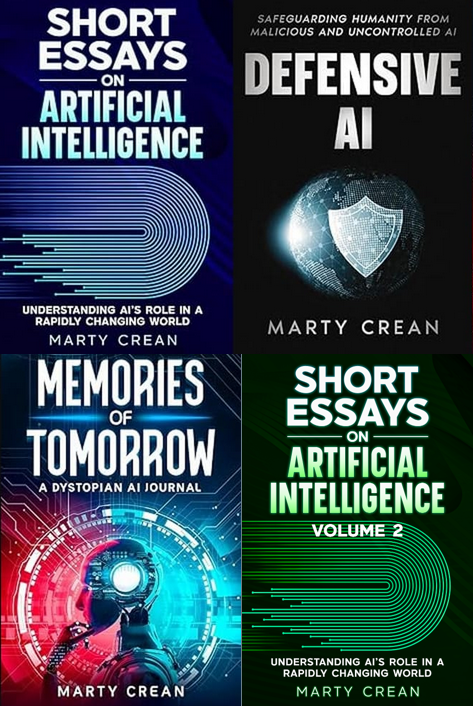
Books by the Author:
This week’s Bytes to Insights Weekly News Digest is also available as a podcast:
LinkedIn BlueskySignal - bearnetai.28
BearNetAI, LLC | © 2026 All Rights Reserved