Bytes to Insights: Weekly News Digest for the Week of June 28th, 2026

Welcome to Bytes to Insights for the week of June 28th, 2026, where we explore the latest breakthroughs and trends in artificial intelligence.
For most of the past two years, the AI conversation has turned on a single question of who could build the most capable model. This week suggested that a second contest now carries equal weight. Who gets to decide when those models are deployed, how they reach the public, and under what conditions they are allowed to operate?
The developments that mattered most were not benchmark scores or polished demonstrations. They reflected a quieter yet more consequential shift because AI is becoming part of national infrastructure, scientific research, and public policy simultaneously. The most important idea this week is that artificial intelligence is moving off the technology pages and into the institutions that shape society.
The major story came out of Washington, where the federal government lifted restrictions on Anthropic's most advanced models after the company implemented additional safeguards and agreed to work more closely with regulators on security standards. The reversal followed weeks of negotiation over export controls and model safety.
Its significance reaches well beyond a single company. Only a year ago, frontier developers largely decided for themselves when a new model would ship. Today, governments are beginning to treat advanced AI the way they treat critical infrastructure, as something that warrants review, negotiation, and continuing oversight. Whether that shift proves healthy remains an open question, but the direction no longer is. Frontier AI has become a matter of public policy and not private innovation alone.
The debate over whether governments will involve themselves is effectively settled, and arguing otherwise now feels like arguing with the weather. The harder question is whether they can build oversight that strengthens safety without smothering the innovation worth protecting. Getting that balance right may turn out to be one of the defining problems of the era.
Reports also surfaced this week that OpenAI has considered an unusual proposal involving a public equity stake for the U.S. government as one possible way to share the economic value generated by advanced AI. It remains only a proposal, but the fact that it is being discussed at all points to a larger set of questions about who should benefit from systems that are becoming this valuable.
A few years ago, these companies saw themselves as technology startups. Today they look more like public institutions whose decisions ripple through national economies, labor markets, education, healthcare, and security.
The conversation is widening beyond technical performance toward harder questions about who owns these systems, who benefits from the wealth they generate, who is held accountable for the harm they cause, and who ultimately governs them as they grow more capable. Those questions are likely to define the next decade of AI policy far more than any single leaderboard.
One of the more thoughtful pieces published this week profiled the philosopher Iason Gabriel of Google DeepMind and showed how ethical reasoning has become embedded in frontier development rather than bolted on after the fact.
Not long ago, talk of AI ethics was often waved off as a drag on progress. That attitude is changing. The leading laboratories increasingly recognize that raw capability is not enough, and that questions of human values, alignment, transparency, and social impact belong inside the development process rather than in a press release that follows it.
This is an encouraging turn. History suggests that powerful technologies are judged not only by what they can do but also by whether people trust those who deploy them. Trust may prove to be one of AI's most valuable competitive assets, and unlike compute, it cannot be bought by the crate.
While governance dominated the headlines, companies quietly kept expanding the practical tools beneath the surface. Anthropic introduced Claude Sonnet 5, aimed at professional work and software development, alongside Claude Science, a research environment built specifically for scientists. Google, for its part, summarized a month of announcements that included new translation abilities, Gemini-powered consumer products, and deeper AI integration across its services.
Taken together, these releases reinforce a trend worth watching. The future of AI may involve fewer general-purpose chatbots and many more domain-specific assistants built for medicine, engineering, education, legal work, research, finance, and countless other fields. Rather than replacing the experts, most of these systems aim to become capable collaborators who make the experts work faster and more sharply.
As we step back, a clearer pattern emerges. The AI race is no longer just OpenAI against Anthropic, or Google against Meta, or America against China. Increasingly, it runs through institutions, through universities and governments, scientific laboratories and defense organizations, healthcare systems, schools, and ordinary businesses. The question is drifting away from who holds the smartest model and toward which institutions can absorb AI most responsibly and most effectively. That is a much broader competition and, arguably, a more consequential one.
A few threads are worth following in the coming weeks. Expect additional government frameworks for evaluating frontier systems before deployment, along with continued expansion of specialized assistants built for professions. Watch for fresh debate over the economic models used to distribute the value AI creates, and for governance to keep rising in prominence alongside the technical advances that usually claim the spotlight.
The week of June 28 may be remembered less for any one model release than for what it revealed about the direction of the whole enterprise. Artificial intelligence is steadily becoming infrastructure. Infrastructure requires governance. Governance requires trust. And trust depends, in the end, on transparency, accountability, and leadership willing to think past the next release.
At BearNetAI, we believe these conversations deserve as much attention as benchmark scores and product launches. The future of AI will not be decided solely by what machines become capable of doing. It will be shaped just as much by the institutions and values that guide their development. As AI works its way into the fabric of daily life, our greatest challenge may no longer be building more intelligent systems. It may be building the wisdom to use them well.
Support BearNetAI
BearNetAI exists to make AI understandable and accessible. Aside from occasional book sales, I receive no other income from this work. I’ve chosen to keep BearNetAI ad-free so we can stay independent and focused on providing thoughtful, unbiased content.
Your support helps cover website costs, content creation, and outreach. If you can’t donate right now, that’s okay. Sharing this post with your network is just as helpful.
Thank you for being part of the BearNetAI community.
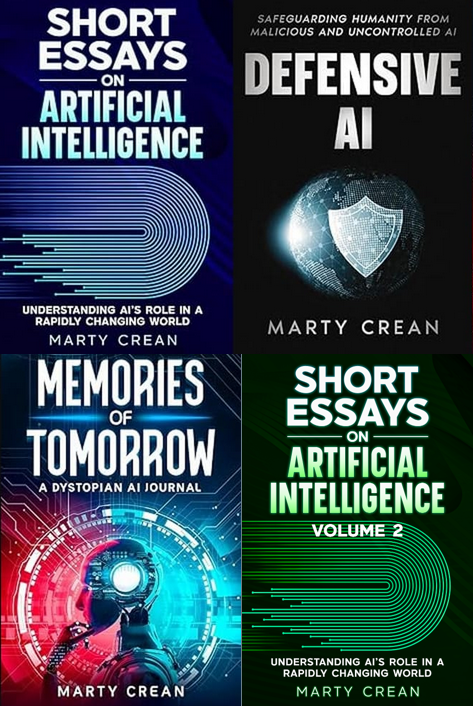
Books by the Author:
This week’s Bytes to Insights Weekly News Digest is also available as a podcast:
LinkedIn BlueskySignal - bearnetai.28
BearNetAI, LLC | © 2026 All Rights Reserved