Bytes to Insights: Weekly News Digest for the Week of June 7th, 2026

Welcome to Bytes to Insights for the week of June 7th, 2026, where we explore the latest breakthroughs and trends in artificial intelligence.
If there was a single theme that defined this week, it was scale.
For much of the past three years, public attention has focused on chatbots, image generators, and increasingly capable AI models. Behind the scenes, however, a different race has been unfolding: the construction of the infrastructure required to power those systems.
This week offered another reminder that AI is rapidly becoming an infrastructure industry.
Anthropic announced plans, backed by major financial firms, to dramatically expand AI computing capacity, with projects measured not in servers or data centers but in gigawatts of power consumption. The numbers involved increasingly resemble national infrastructure projects rather than traditional technology investments.
The significance extends beyond one company. AI development is becoming constrained less by algorithms and more by energy, compute, networking, and capital. Organizations that secure these resources may enjoy substantial advantages over competitors.
For historians looking back on 2026, this may be remembered as the period when AI ceased being primarily a software story and became an infrastructure story.
Apple’s Worldwide Developers Conference generated significant attention this week with the introduction of a substantially redesigned AI-powered Siri.
The announcement stands out because it shows AI has become a standard expectation within consumer technology.
For years, Apple has often entered markets after competitors and focused on integration rather than novelty. The company’s emphasis on privacy, on-device processing, contextual awareness, and deep operating system integration suggests that the next phase of AI competition may be less about who has the most capable model and more about who can make AI genuinely useful in everyday life.
The broader takeaway is that AI is moving from destination applications into the operating system itself. Increasingly, users may not think about using “AI” any more than they think about using the internet. It simply becomes part of the computing experience.
Another recurring theme this week was the growing financial scale of the AI sector.
The industry attracts extraordinary investment, with discussions shifting toward infrastructure financing, public offerings, and long-term revenue models over research projects.
This evolution reflects a broader transition. The AI industry is entering a phase in which investors, regulators, and customers expect sustainable business models rather than demonstrations of technical feasibility.
The questions are changing. Can AI companies generate durable revenue? Can infrastructure expansion keep pace with demand? Can the economics support continued growth?
These are signs of a technology moving from adolescence toward maturity.
Perhaps the most important long-term trend is that AI is no longer being discussed solely by technologists.
This week saw continued discussion from policymakers, regulators, ethicists, and religious leaders regarding the societal implications of advanced AI systems. Questions surrounding employment, governance, safety, transparency, and human values are increasingly moving into mainstream institutions.
Whether one agrees with particular viewpoints is less important than recognizing the broader shift: AI has become significant enough that major social institutions now consider it part of their mission.
Historically, this is what happens when a technology becomes consequential. It moves beyond laboratories and boardrooms into education, government, law, religion, and public life.
The week reinforces a clear conclusion: The AI era has arrived.
While headlines highlight new models and investments, the deeper story is AI’s integration into the infrastructure, institutions, and everyday systems that shape modern life.
Future historians may not remember the specific announcements made this week. They may instead remember 2026 as the year society stopped asking whether AI would become important and began adapting to the reality that it already was.
As we move further into 2026, BearNetAI will continue watching three indicators:
- Infrastructure expansion and energy requirements.
- Consumer adoption of AI-integrated products.
- Regulatory and societal responses to increasingly capable systems.
These areas may ultimately prove more important than any single model release because they determine how AI becomes embedded in civilization itself.
Technological revolutions are rarely defined by their most exciting inventions. They are defined by the moment those inventions become ordinary. This week, AI took another step from remarkable to routine—a shift that may define our era.
Support BearNetAI
BearNetAI exists to make AI understandable and accessible. Aside from occasional book sales, I receive no other income from this work. I’ve chosen to keep BearNetAI ad-free so we can stay independent and focused on providing thoughtful, unbiased content.
Your support helps cover website costs, content creation, and outreach. If you can’t donate right now, that’s okay. Sharing this post with your network is just as helpful.
Thank you for being part of the BearNetAI community.
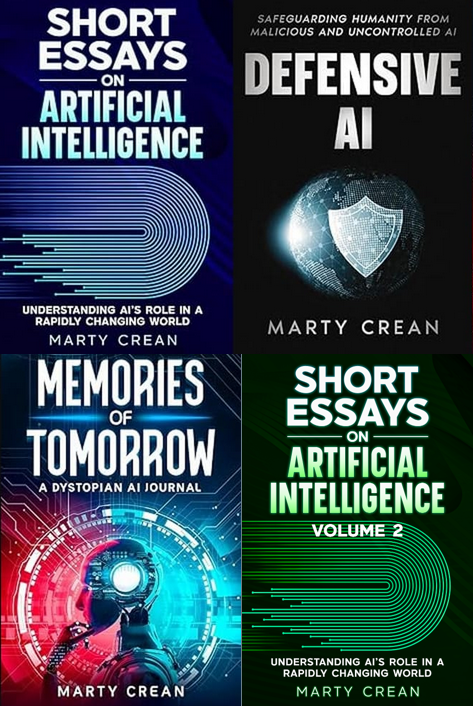
Books by the Author:
This week’s Bytes to Insights Weekly News Digest is also available as a podcast:
LinkedIn BlueskySignal - bearnetai.28
BearNetAI, LLC | © 2026 All Rights Reserved