Bytes to Insights: Weekly News Digest for the Week of March 1st, 2026

The week of March 1st, 2026, marked a pivotal moment in artificial intelligence, as rapid technical progress, ethical tensions, and shifting industry dynamics converged. One of the most notable developments was the expansion of advanced capabilities in leading AI models. Companies introduced systems with dramatically larger context windows and stronger reasoning abilities, enabling these models to process vast amounts of information and perform more complex, multi-step tasks. These improvements signaled a transition from simple conversational tools toward systems that can interact with software, assist in workflows, and act more like intelligent collaborators than passive assistants.
At the same time, memory and personalization became a major focus. New features allowed AI systems to retain user preferences and context across sessions. This made interactions more continuous and tailored. It marked a shift toward persistent AI companions that adapt over time, rather than starting fresh each time. These models began integrating into common workplace tools such as spreadsheets and presentation software. This highlighted how deeply AI was embedding into everyday productivity environments.
However, the week was also defined by controversy surrounding the relationship between AI companies and government institutions. Reports of agreements to deploy advanced AI systems in sensitive environments, including classified networks, sparked public backlash and raised concerns about militarization and ethical boundaries. Some companies resisted participation in these efforts, emphasizing safety restrictions and ethical use policies, while others moved forward with modified agreements. This tension underscored a growing divide within the industry over how AI should be governed and deployed in high-risk scenarios.
Economically, the cost of artificial intelligence continued to decline, accelerating adoption across businesses of all sizes. Lower operating costs made powerful AI tools accessible to smaller organizations and individual creators, fueling a wave of experimentation and innovation. Startups began emerging with lean teams that leveraged AI to handle tasks that traditionally required large workforces, while established companies began restructuring operations around automation and AI-driven efficiency gains.
The broader geopolitical and infrastructure landscape also came into sharper focus. Major technology companies are exploring strategies to secure the massive energy resources needed to power AI data centers, reflecting the growing realization that compute and electricity are becoming strategic assets in the global AI race. At the same time, international competition intensified, with regions pursuing distinct approaches, such as open-source development strategies, to strengthen their positions in the AI ecosystem.
Finally, the week reinforced a deeper trend that has been building over time. Artificial intelligence is no longer evolving in isolation as a technical field but is reshaping labor markets, business models, and global power structures simultaneously. The convergence of improving capabilities, falling costs, ethical debates, and geopolitical competition made early March 2026 feel less like incremental progress and more like a clear acceleration point in the broader AI-driven transformation.
Support BearNetAI
BearNetAI exists to make AI understandable and accessible. Aside from occasional book sales, I receive no other income from this work. I’ve chosen to keep BearNetAI ad-free so we can stay independent and focused on providing thoughtful, unbiased content.
Your support helps cover website costs, content creation, and outreach. If you can’t donate right now, that’s okay. Sharing this post with your network is just as helpful.
Thank you for being part of the BearNetAI community.
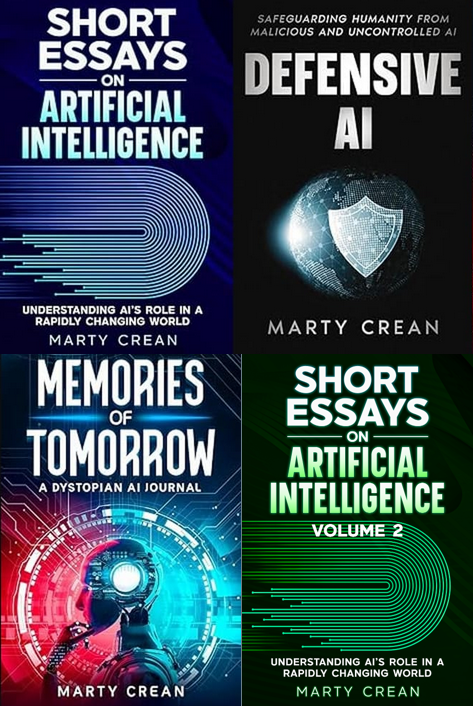
Books by the Author:
Signal - bearnetai.28
BearNetAI, LLC | © 2025 All Rights Reserved