Bytes to Insights: Weekly News Digest for the Week of March 29th, 2026

The final week of March 2026 marked a noticeable shift in artificial intelligence from tools that primarily generate content to systems capable of taking action and executing complex tasks. New model development across the industry emphasized what many are calling “agentic AI,” meaning systems capable of carrying out multi-step workflows with minimal human guidance. This marked a turning point in how AI is positioned, moving beyond chat-based interaction toward a digital collaborator that can operate software, analyze data, and assist with real-world processes.
At the same time, major companies made strategic pivots, revealing how resource-intensive this next phase has become. One notable development was the shutdown of certain high-profile AI products. Companies did this to redirect computing power toward more advanced models. These new models focus on reasoning and practical utility. The industry is now prioritizing depth of capability over novelty features. This trend is especially clear as competition intensifies to build powerful, useful systems.
Hardware and infrastructure also took center stage during the week. Semiconductor and chip companies continued to reposition themselves as critical enablers of AI’s future, with new processor designs specifically aimed at supporting autonomous decision-making systems rather than traditional workloads. These developments underscored a growing realization that the future of AI is not just about algorithms but about the massive computational ecosystems required to sustain them.
In the enterprise world, the narrative was more measured. Industry leaders emphasized that AI is more likely to enhance existing mission-critical systems rather than replace them outright in the near term. Businesses are increasingly layering AI capabilities onto established platforms, enabling gradual transformation rather than sudden disruption. This suggests that while AI is advancing rapidly, its integration into large-scale operations will remain evolutionary rather than instantaneous.
Healthcare and scientific research continued to benefit from AI progress. Major partnerships were announced to accelerate drug discovery using AI-driven methods. Machine learning is shortening development timelines and expanding the range of possible treatments. These collaborations show that AI’s impact is reaching beyond software. It now drives innovation in the physical world, bringing tangible societal benefits.
Policy, regulation, and national security concerns also intensified during this period. Governments explored new legislation related to AI infrastructure and data centers, while broader discussions highlighted the risks of misinformation, cyber threats, and military applications. Artificial intelligence is now widely viewed as a strategic asset, with nations investing heavily while grappling with how to responsibly control and govern its use.
Taken together, the week of March 29, 2026, captured a moment where artificial intelligence is maturing into a foundational technology. The focus is shifting from experimentation and hype toward capability, infrastructure, and real-world integration. At the same time, the rapid pace of advancement is forcing difficult conversations about economics, governance, and the balance between innovation and risk.
BearNetAI exists to make AI understandable and accessible. Aside from occasional book sales, I receive no other income from this work. I’ve chosen to keep BearNetAI ad-free so we can stay independent and focused on providing thoughtful, unbiased content.
Your support helps cover website costs, content creation, and outreach. If you can’t donate right now, that’s okay. Sharing this post with your network is just as helpful.
Thank you for being part of the BearNetAI community.
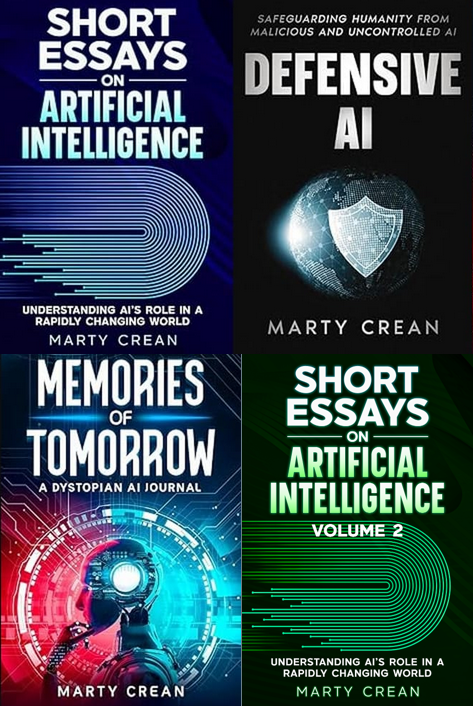
Books by the Author:
Signal - bearnetai.28
BearNetAI, LLC | © 2025 All Rights Reserved