Bytes to Insights: Weekly News Digest for the Week of March 8th, 2026

During the week of March 8, 2026, developments in artificial intelligence reflected a field expanding rapidly beyond technical improvements into broader societal, economic, and geopolitical domains. The conversation around AI was no longer centered only on model performance, but increasingly on how these systems are being integrated into real-world environments, from enterprise workflows to national policy debates.
One of the most notable trends during this period was the continued rise of agentic AI systems. These systems are designed to act autonomously and carry out tasks with minimal human prompting. They signal a shift from passive tools to active participants in digital workflows. At the same time, new AI models and supporting technologies continued to emerge. This included more efficient architectures and improved hardware. These advances enabled faster and more cost-effective deployment across industries. The combination of smarter software and more powerful infrastructure lowered barriers to entry. Startups and smaller organizations could compete in ways that were previously unrealistic.
The week also highlighted the growing importance of AI in financial systems and commerce. Early implementations of AI-driven transactions, including fully automated payment processes executed by intelligent agents, demonstrated how AI could operate not just as a support tool but as a direct actor in economic activity. These developments pointed toward a future in which AI systems could independently manage complex financial operations, raising both opportunities for efficiency and new questions about oversight and trust.
At the same time, governance and ethical concerns became more prominent. Discussions intensified around the role of AI in military applications and cybersecurity, reflecting increasing awareness that advanced AI systems could have dual-use implications. Governments and organizations were grappling with how to balance innovation with safety, particularly as AI capabilities began to intersect with national security and global competition.
Another important theme was the transformation of work. Organizations were beginning to restructure around AI. These tools helped augment productivity and, in some cases, reduce the need for larger teams. Rather than eliminating jobs outright, AI was reshaping roles and redistributing demand across skill sets. This emphasized the importance of adaptability and continuous learning. The shift suggested that the future of work would be defined less by replacement and more by collaboration between humans and intelligent systems.
Overall, the week of March 8, 2026, captured a moment where artificial intelligence was transitioning from a powerful emerging technology into a foundational layer of modern society. The acceleration of capabilities, combined with expanding real-world applications and rising ethical considerations, underscored that AI was no longer advancing solely as a technical field but was evolving into a defining force across nearly every sector of human activity.
Support BearNetAI
BearNetAI exists to make AI understandable and accessible. Aside from occasional book sales, I receive no other income from this work. I’ve chosen to keep BearNetAI ad-free so we can stay independent and focused on providing thoughtful, unbiased content.
Your support helps cover website costs, content creation, and outreach. If you can’t donate right now, that’s okay. Sharing this post with your network is just as helpful.
Thank you for being part of the BearNetAI community.
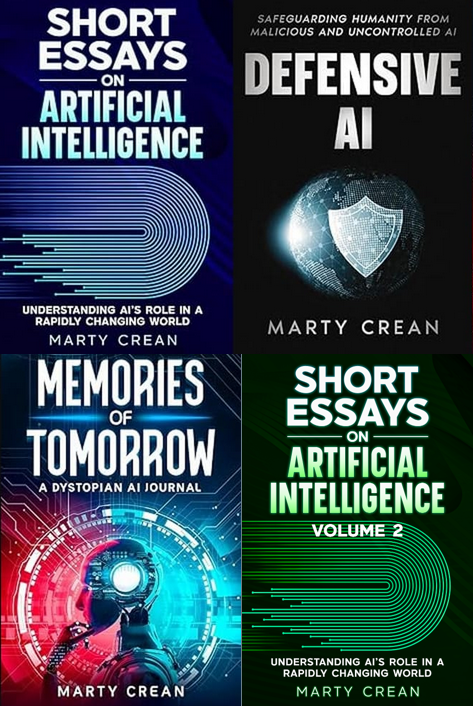
Books by the Author:
Signal - bearnetai.28
BearNetAI, LLC | © 2025 All Rights Reserved