Bytes to Insights: Weekly News Digest for the Week of May 17th, 2026

Welcome to Bytes to Insight for the week of May 17th, 2026, where we discuss the latest breakthroughs and trends in artificial intelligence.
This week in artificial intelligence was not defined by a single breakthrough, but by a growing realization that AI is rapidly evolving into a foundational layer beneath business, infrastructure, defense, research, and daily life. The pace of announcements, partnerships, and strategic repositioning suggests the industry is moving beyond the “chatbot era” and deeper into a world where AI systems increasingly act, reason, coordinate, and operate autonomously.
One of the clearest themes this week was the intensifying competition among the major frontier AI labs. Anthropic continued its rise as a serious challenger to OpenAI and Google, highlighted by reports that enterprise adoption of Claude has now surpassed OpenAI in some business sectors, particularly software development and coding workflows. Claude’s growing reputation among developers appears to be reshaping the competitive landscape around AI-assisted programming and enterprise productivity.
That momentum was reinforced by one of the week’s most symbolic moves. Andrej Karpathy, a founding member of OpenAI and one of the most recognizable educators and engineers in modern AI, officially joined Anthropic to work on foundational model training and research. His move reflects a broader trend that increasingly defines the AI race. The battle is no longer only about models and hardware. It is also about attracting a small number of researchers capable of advancing frontier systems themselves.
Meanwhile, Google continued pushing aggressively into agentic AI. At its developer conference, Google unveiled new Gemini-based systems designed to autonomously navigate digital environments and perform personal tasks across services. The company also previewed AI-powered smart glasses focused on real-time assistance, translation, and contextual interaction. These developments suggest that AI companies are increasingly shifting attention away from standalone chat interfaces toward persistent digital assistants integrated into everyday environments and devices.
The scale of infrastructure investment behind AI also became impossible to ignore this week. NVIDIA reported staggering data center revenues, while major technology firms signaled continued massive spending on compute infrastructure, cloud systems, and custom AI hardware. Reports on SpaceX, xAI, Google, Blackstone, and Anthropic showed that AI is now as much an energy and infrastructure story as a software story. The emerging AI economy increasingly resembles the early buildout of the internet itself, requiring enormous investments in data centers, power generation, networking, and specialized chips.
Another major development this week involved AI’s growing relationship with national defense and military systems. Reports highlighted escalating tensions between AI developers and governments over the use of frontier AI models in autonomous weapons, surveillance, and military targeting systems. Anthropic’s refusal to remove restrictions against fully autonomous weapons and mass surveillance underscored a deeper ethical divide emerging within the industry. At the same time, governments appear increasingly unwilling to slow deployment amid accelerating geopolitical competition. The debate over “human oversight” in AI warfare is no longer theoretical. It is rapidly becoming an operational reality.
This week also revealed a growing maturity in AI research itself. Several new papers focused not merely on making models larger, but on making them more reliable, persistent, and useful over long time horizons. Research into memory architectures, scientific agents, and deep-research systems reflects an important transition in the field. AI is moving beyond isolated prompt-and-response interactions toward systems capable of sustained reasoning, long-term task management, and iterative research workflows. However, benchmark studies released this week also showed that even advanced systems continue to struggle with consistency, hallucinations, arithmetic accuracy, and structured reasoning under real-world conditions.
Perhaps the most historically significant signal this week was not any individual product release, but the convergence of several realities. Frontier models are becoming more autonomous. AI companies are becoming infrastructure giants. Governments are integrating AI into national strategy. Businesses are reorganizing around AI-assisted workflows. And researchers are increasingly treating AI systems less like tools and more like persistent collaborators.
For BearNetAI readers looking at the long arc of AI history, this week may ultimately be remembered as part of the transition from the “AI application phase” into the “AI systems phase.” The technology is no longer sitting at the edges of society waiting to be adopted. It is steadily embedding itself into the operational core of institutions, economies, and decision-making structures.
The question is no longer whether AI will shape the future. The question is how wisely, transparently, and responsibly humanity chooses to shape AI as it becomes part of the infrastructure of civilization itself.
Support BearNetAI
BearNetAI exists to make AI understandable and accessible. Aside from occasional book sales, I receive no other income from this work. I’ve chosen to keep BearNetAI ad-free so we can stay independent and focused on providing thoughtful, unbiased content.
Your support helps cover website costs, content creation, and outreach. If you can’t donate right now, that’s okay. Sharing this post with your network is just as helpful.
Thank you for being part of the BearNetAI community.
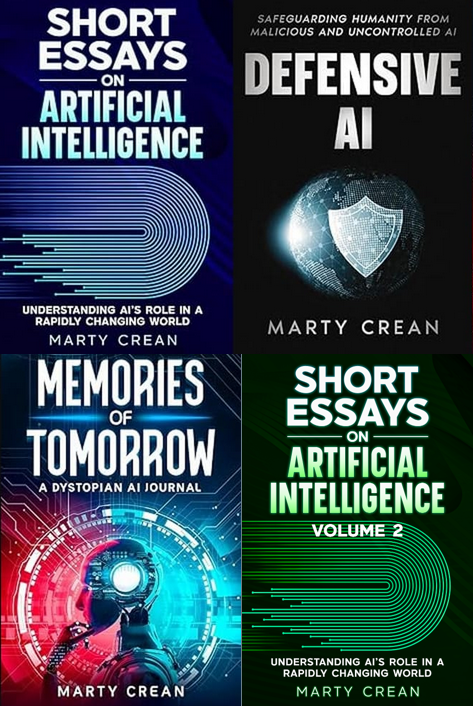
Books by the Author:
This week’s Bytes to Insights Weekly News Digest is also available as a podcast:
LinkedIn BlueskySignal - bearnetai.28
BearNetAI, LLC | © 2026 All Rights Reserved