Bytes to Insights: Weekly News Digest for the Week of May 24th, 2026

Welcome to Bytes to Insight for the week of May 24th, 2026, where we discuss the latest breakthroughs and trends in artificial intelligence.
This may ultimately be remembered less for any single AI breakthrough and more for the growing realization that artificial intelligence is rapidly becoming a defining force in economics, governance, infrastructure, and society. Several developments this week highlighted a continuing transition away from AI as a technology story and toward AI as a geopolitical, financial, and cultural force shaping the future.
One of the most significant themes was the accelerating concentration of capital around frontier AI companies. Anthropic reportedly moved closer to a valuation approaching one trillion dollars following another massive funding round. At the same time, reports emerged that OpenAI had confidentially filed paperwork related to a future public offering. These developments demonstrate that investors increasingly view frontier AI companies not as speculative startups but as foundational infrastructure providers for the next generation of computing. The scale of investment now flowing into AI rivals that of historic shifts in railroads, telecommunications, and the early internet. For observers of long-term trends, the story is no longer whether AI will reshape the economy, but which organizations will control the platforms that power that transformation.
The competitive landscape also shifted further following Google's announcements at its annual I/O conference. Google unveiled Gemini 3.5 Flash along with expanded agent-based capabilities and new efforts to integrate AI more deeply into search, productivity tools, and consumer experiences. The company signaled that the future of search may increasingly involve AI-generated assistance rather than traditional link lists. This represents a continuation of a broader industry movement toward autonomous agents capable of performing multi-step tasks rather than simply responding to prompts. While much of the public discussion continues to focus on chatbots, the larger story is the gradual emergence of AI systems that can plan, execute, and monitor complex workflows with increasing independence.
Another important development came from the growing focus on AI infrastructure and developer ecosystems. Anthropic's acquisition of developer tooling company Stainless reflected a broader trend among major AI firms to strengthen the software layers surrounding their models. The competition is no longer limited to building the most capable model. Success increasingly depends on creating ecosystems that allow developers and enterprises to integrate AI into real-world applications quickly and securely. Throughout the technology industry, companies are racing to become the platform on which future AI-powered businesses will be built.
This week also highlighted the continuing debate over AI governance and ethics. Pope Leo XIV released a major encyclical addressing artificial intelligence, automation, human dignity, and the responsibilities of technology developers. While religious institutions are not typically viewed as drivers of technological policy, the document underscored a growing global concern that AI development is outpacing society's ability to establish ethical guardrails. Simultaneously, policymakers in Europe continued work on AI governance frameworks, including consultations on the implementation of the European Union's AI Act. Together, these developments illustrate a broader pattern. As AI capabilities expand, discussions about regulation, accountability, transparency, and human oversight are becoming increasingly central rather than peripheral.
The week also reinforced a reality that has become impossible to ignore. AI is driving profound changes in workforce planning and organizational structure. Several technology firms announced restructuring efforts tied to AI adoption, either directly or indirectly. While automation-driven workforce changes are not new, executives are increasingly willing to publicly frame organizational transformation in terms of AI-enabled productivity gains. This represents a significant shift from earlier years, when discussions of automation were often softened or avoided. The long-term implications for employment, skills development, and workforce adaptation remain among the most important questions facing businesses and governments alike.
Perhaps the most important takeaway from this week's developments is the growing convergence of three powerful forces. First, AI capabilities continue to advance rapidly. Second, unprecedented amounts of capital are flowing into the sector. Third, governments, institutions, and society are beginning to grapple with the broader consequences of these technologies. The interaction between these forces will likely define much of the remainder of the decade.
This week's developments reinforce a theme that has appeared repeatedly throughout 2026. Artificial intelligence is evolving from a collection of tools into a foundational layer of modern society. The companies leading AI development are accumulating extraordinary financial resources. Governments are increasingly treating AI as a strategic national priority. Institutions ranging from universities to religious organizations are weighing in on its societal implications.
The question facing society is no longer whether AI will become influential; it is whether it will. That transition is already underway. The more important question is how humanity chooses to guide that influence. As AI becomes embedded in economic systems, public institutions, education, healthcare, scientific research, and daily life, thoughtful governance and informed public understanding become increasingly important.
Staying informed about AI is no longer simply a matter of following technology news. It is increasingly a matter of understanding the forces that will shape economies, careers, communities, and democratic institutions in the years ahead.
As we continue through 2026, the pace of change remains extraordinary. Yet the most significant stories are often not the newest models or the latest benchmarks. The deeper story is how AI is becoming woven into the fabric of society itself.
Key themes this week were AI's consolidation into a handful of extraordinarily powerful firms, the emergence of agent-based systems as the industry's next frontier, and growing global discussions about governance and ethics. These are exactly the kinds of developments that will matter when you assemble the 2026 AI Year in Review because they represent long-term shifts rather than short-lived product announcements.
Support BearNetAI
BearNetAI exists to make AI understandable and accessible. Aside from occasional book sales, I receive no other income from this work. I’ve chosen to keep BearNetAI ad-free so we can stay independent and focused on providing thoughtful, unbiased content.
Your support helps cover website costs, content creation, and outreach. If you can’t donate right now, that’s okay. Sharing this post with your network is just as helpful.
Thank you for being part of the BearNetAI community.
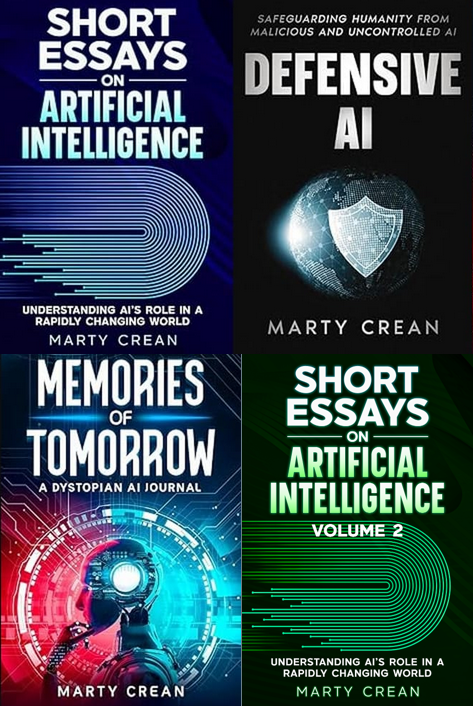
Books by the Author:
This week’s Bytes to Insights Weekly News Digest is also available as a podcast:
LinkedIn BlueskySignal - bearnetai.28
BearNetAI, LLC | © 2026 All Rights Reserved