Bytes to Insights: Weekly News Digest for the Week of May 31st, 2026

Welcome to Bytes to Insights for the week of May 31st, 2026, where we explore the latest breakthroughs and trends in artificial intelligence.
If a single theme defined this week, it was the sense that artificial intelligence is evolving from a technology race into a competition over infrastructure, governance, and economic power.
For the past three years, public conversation has centered largely on which company released the smartest model. This week suggested that the questions that matter most are starting to change. They now have less to do with raw capability and more to do with control. Who owns the computing infrastructure? Who writes the rules? Who can afford to compete? And who stands to benefit when these systems are deployed across the world? Several developments this week point toward an industry entering a new phase.
One of the most consequential developments came not from Silicon Valley but from Washington. A bipartisan group of U.S. lawmakers released draft legislation that would significantly limit individual states' ability to set their own rules governing the development of advanced AI models. States would retain authority over how AI is used, but the proposal aims to establish a more unified national framework for building AI.
The industry has warned for some time that a patchwork of state regulations could create conflicting requirements and slow progress. Critics counter that federal action risks weakening local consumer protections before strong national safeguards are in place. Either way, the moment policymakers begin moving from reactive debate toward a long-term governance structure may prove to be a turning point. The question is no longer whether AI will be regulated. It is who gets to write the rules.
That contest over rules is unfolding alongside an older constraint. Artificial intelligence remains limited, above all, by computing power. This week, the United States moved to close export-control loopholes that had allowed advanced AI chips to reach Chinese organizations through foreign subsidiaries. At nearly the same time, Nvidia unveiled its RTX Spark platform, designed to bring advanced AI capabilities directly onto personal computers rather than relying entirely on the cloud.
Taken together, these moves show how closely AI competition now resembles earlier industrial contests over oil, electricity, railroads, and telecommunications. Models may capture the headlines, but chips determine who can train, deploy, and scale them. As governments tighten controls and companies pour billions into hardware, semiconductors are becoming one of the defining strategic resources of the AI era.
The same dynamic of scale and concentration surfaced in the week's biggest corporate story. Anthropic dominated industry discussion after reports about its extraordinary valuation growth and massive financing activity. The company's valuation has approached the trillion-dollar threshold, making it one of the most valuable private technology firms in history. At almost the same moment, it released new capabilities for Claude while continuing to press for stronger AI safety measures.
A few years ago, many observers doubted whether generative AI would ever become a sustainable business. That debate is largely settled. The new one concerns the concentration of power. When a handful of organizations command hundreds of billions of dollars in valuation, enormous compute contracts, and access to frontier models, AI starts to look less like a traditional software market and more like the rise of an earlier industrial giant. That shift raises hard questions about competition, access, and the long-term structure of the market.
Beneath these headlines, the industry's center of gravity continued its move from chatbots toward autonomous agents. Throughout the week, organizations kept rolling out systems that can act across applications, workflows, and enterprise environments rather than simply respond to prompts. Google's broader push toward an agentic version of Gemini remained a major topic following its recent developer conference, and developers saw a steady increase in tools for managing agents, deploying them, and automating workflows.
The transition from answering questions to performing tasks may ultimately matter more than any single model upgrade. For most of its history, software has required human operators. The emerging vision is software that operates on behalf of humans instead. If that shift succeeds, its effect on productivity, employment, cybersecurity, education, and governance could outweigh the impact of conversational AI itself.
That promise arrived alongside a striking tension. As investment reached historic highs and deployment accelerated, calls for caution grew louder rather than quieter. Anthropic publicly argued for stronger safeguards and for slowing frontier development until society can better understand and manage the risks that come with it.
Whether one agrees with that position or not, the debate reflects a broader reality. The conversation is no longer split cleanly between optimists and skeptics. Increasingly, the same people building technology are calling for both faster deployment and stronger guardrails at once. That paradox may come to define the next stage of AI development. The challenge facing society is no longer whether AI should advance. It is how to advance responsibly while staying economically competitive.
Step back, and the most important story of the week was not a model release at all. It was the growing realization that AI is becoming infrastructure. Governments are writing rules. Companies are building systems others will depend on. Investors are funding expansion on an industrial scale. Chip manufacturers are turning into geopolitical actors. And AI systems are moving beyond conversation into action.
A few questions are worth watching in the weeks ahead. Will Congress advance a national regulatory framework, and how will governments respond to mounting concern over the concentration of compute? Can AI agents move from impressive demonstrations to reliable daily tools, and will local computing begin to reduce the industry's dependence on the cloud? And running through all of it, how will companies balance the rush to deploy against the growing pull toward caution? These questions may prove more important than any single model announcement, and the answers will help shape the next chapter of the AI story.
Support BearNetAI
BearNetAI exists to make AI understandable and accessible. Aside from occasional book sales, I receive no other income from this work. I’ve chosen to keep BearNetAI ad-free so we can stay independent and focused on providing thoughtful, unbiased content.
Your support helps cover website costs, content creation, and outreach. If you can’t donate right now, that’s okay. Sharing this post with your network is just as helpful.
Thank you for being part of the BearNetAI community.
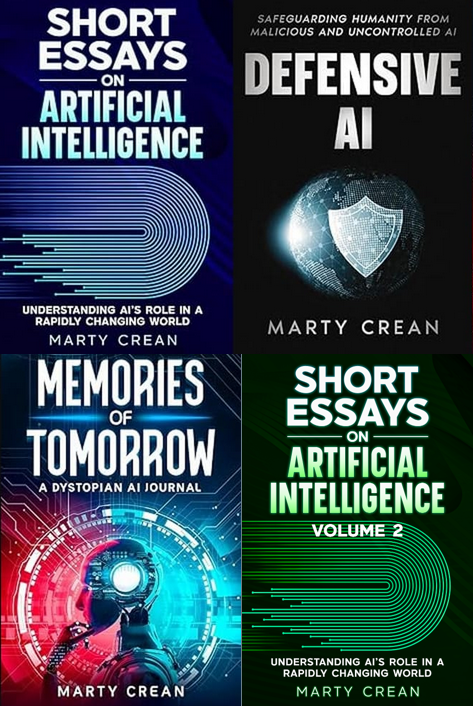
Books by the Author:
This week’s Bytes to Insights Weekly News Digest is also available as a podcast:
LinkedIn BlueskySignal - bearnetai.28
BearNetAI, LLC | © 2026 All Rights Reserved