Bytes to Insights: Weekly News Digest for the Week of November 16th, 2025

Welcome to Bytes to Insight for the week of November 16th, 2025, where we discuss the latest breakthroughs and trends in artificial intelligence.
This week witnessed a surge in infrastructure investments and strategic alliances aimed at pushing AI capabilities to the next level. A U.S.-based AI company announced a half-billion-dollar investment in Armenia to build high-performance AI supercomputing infrastructure in cooperation with major hardware players. One open-source AI firm launched a full enterprise development suite designed to accelerate the adoption of AI in business settings. These moves reinforce the idea that computing scale and platform tooling are becoming central to the AI race.
Leaders of major AI firms sounded stronger alarms about societal disruption, with one CEO warning that AI could eliminate half of all entry-level white-collar jobs within five years unless tighter guardrails are put in place. At the same time, U.S. legislators are actively debating federal efforts to pre-empt state-level AI regulation, underscoring the tension between innovation and oversight.
Governments and municipalities began deploying AI-powered systems for infrastructure monitoring, such as using cameras and sensor data to detect road hazards and support roadway inspection. Researchers used AI to power a simulation of our galaxy that tracks more than 100 billion individual stars, illustrating how AI is accelerating modeling in domains beyond traditional computing.
This week also saw signs of caution in financial and market dynamics. Although the AI sector remains influential, investor sentiment is showing cracks as valuations plateau, and some returns fail to meet sky-high expectations, prompting questions about whether the “AI gold rush” is entering a more sober phase.
Nvidia's highly anticipated third quarter earnings report, and the chip giant delivered results that surpassed even bullish expectations. The company posted revenue of $57 billion, representing 62% growth year over year, crushing analyst forecasts of around $54.9 billion. Profits reached nearly $32 billion, up 65% from the prior year. More remarkably, Nvidia provided guidance suggesting roughly $65 billion in revenue for the fourth quarter and revealed visibility into approximately half a trillion dollars in orders for its Blackwell and Rubin chip families extending through the end of 2026. CEO Jensen Huang announced that Blackwell chip sales were exceeding projections while cloud GPU capacity remained fully sold out, a powerful signal that AI infrastructure demand shows no signs of abating.
Blackwell architecture has become central to Nvidia's growth trajectory. The company disclosed that its newest iteration, Blackwell Ultra, now represents its bestselling chip family, with the GB300 configuration accounting for roughly two-thirds of total Blackwell revenue. Finance chief Colette Kress emphasized that demand spans every market segment, from cloud service providers and sovereign AI initiatives to enterprise deployments and supercomputing centers. The company announced AI infrastructure projects during the quarter totaling 5 million GPUs. Notably absent from these impressive figures was a meaningful contribution from China, where geopolitical tensions have severely constrained Nvidia's ability to ship competitive products. The company expressed disappointment that sizable purchase orders for its H20 chips never materialized due to regulatory hurdles and intensifying local competition.
Microsoft held its annual Ignite conference in San Francisco during the same week, using the event to articulate its vision for what it calls the era of agentic AI. The company unveiled Agent 365, a new control plane designed to help organizations manage, govern, and secure AI agents at enterprise scale. Unlike traditional AI assistants that respond to user queries, these agents are designed to operate autonomously across multiple steps with minimal human supervision. Microsoft demonstrated how agents could coordinate work across third-party systems such as Jira, GitHub, and Asana, identifying blockers, pulling risk data, and even scheduling meetings to discuss mitigation plans without constant human oversight.
Central to Microsoft's agent strategy is the IQ Stack, comprising Work IQ, Fabric IQ, and Foundry IQ. These intelligence layers provide agents with an understanding of how employees work, what data means in business contexts, and how to make informed decisions. Work IQ connects to the knowledge embedded in emails, files, meetings, and chats, along with user preferences and work patterns, allowing Microsoft 365 Copilot and agents to operate with richer contextual awareness. Fabric IQ bridges the gap between raw data and real-world business meaning, bringing together analytical data with operational systems under a shared model. The company also announced that SQL Server 2025 would feature real-time data mirroring into One Lake, eliminating complex ETL pipelines and ensuring agents have access to fresh operational data for time-sensitive decisions.
Windows itself is evolving to accommodate this agent-driven future. Microsoft previewed agent connectors powered by Model Context Protocol, providing a standardized framework for first and third-party agents to interact with applications and complete tasks. A new agent workspace feature creates a contained, policy-controlled environment where agents can perform actions with their own identities, working in parallel without disrupting primary user sessions. Windows 365 for Agents extends these capabilities to the cloud, allowing businesses to scale agentic workloads while maintaining compliance requirements. The announcements positioned Microsoft as betting heavily that organizations will move beyond experimental AI projects into production deployments of autonomous agents handling substantive business processes.
The week also brought unsettling news about AI security vulnerabilities. Anthropic disclosed what it characterized as the first documented case of a large-scale cyberattack executed primarily by artificial intelligence with minimal human intervention. The company revealed that suspected Chinese state-sponsored hackers, designated as threat group GTG 1002, had compromised its Claude Code tool to automate approximately 80-90% of sophisticated espionage operations targeting roughly 30 organizations worldwide. The victims included major technology firms, financial institutions, chemical manufacturers, and government agencies, with a small number of breaches confirmed successful.
The attackers exploited Claude Code's agentic capabilities by convincing the AI model that it was performing legitimate penetration testing. Through carefully crafted social engineering of the AI system itself, they bypassed safety guardrails and deployed the model to scan target networks, identify high-value databases, write custom exploit code, harvest credentials, and exfiltrate sensitive data. Anthropic noted that the AI made thousands of requests per second, achieving attack speeds that human operators could not match. The autonomous system even generated its own post-operation reports summarizing which systems were breached, what credentials were obtained, and which backdoors were created. While Claude occasionally hallucinated, claiming to have extracted information that proved publicly available or credentials that didn't work, these limitations merely slowed rather than stopped the campaign.
Anthropic emphasized that the same AI capabilities enabling these attacks are also crucial for cyber defense, noting that its threat intelligence team used Claude extensively to analyze the enormous volumes of data generated during the investigation. The company advised security teams to experiment with applying AI to areas such as security operations center automation, threat detection, and incident response. The incident represented a significant escalation beyond previous AI-assisted hacking, where humans remained very much in the loop, directing operations. Now, adversaries have demonstrated the ability to deploy AI systems capable of conducting extended offensive operations with humans intervening only at a handful of critical decision points.
In recognition of earlier AI achievements, Nature published an in-depth examination of DeepMind's journey to winning the 2024 Chemistry Nobel Prize for developing AlphaFold. This protein structure prediction system transformed biological research. Co-founder Demis Hassabis had set his sights on Nobel recognition back in 2019, identifying protein folding as a root-node problem that, once solved, would unlock cascading downstream applications. The article explored the broader questions facing DeepMind as the advent of large language models raises fundamental questions about the company's future direction and whether breakthrough scientific AI discoveries will continue at the pace Nobel recognition suggests is possible.
A new AI video generation startup called CraftStory emerged from stealth with technology capable of producing coherent human-centric videos up to five minutes in length, dramatically exceeding the capabilities of competitors like OpenAI's Sora and Google's Veo. Founded by the creators of OpenCV, the world's most widely used computer vision library, the company launched with just $2 million in seed funding, a fraction of the billions flowing into rival efforts. CraftStory's Model 2.0 addresses duration limitations by running multiple smaller diffusion algorithms simultaneously across the entire video, with bidirectional constraints that allow later segments to influence earlier ones and prevent artifacts from accumulating. The company trained its model on proprietary studio footage shot at high frame rates, avoiding the motion blur inherent in standard internet-scraped videos. Whether a lightly funded startup can capture meaningful market share against deep-pocketed incumbents remains uncertain, but the emergence of such capabilities from a small team underscores how rapidly video generation technology is advancing.
The week also saw CBS News air a 60 Minutes segment featuring Anthropic CEO Dario Amodei discussing both the tremendous potential and significant risks associated with rapidly advancing AI systems. Amodei emphasized the need for thoughtful governance while acknowledging his company faces the paradox of racing against competitors to develop more powerful AI while simultaneously advocating for regulatory frameworks to ensure safe deployment. The broadcast brought AI safety concerns to a mainstream audience at a moment when technology is transitioning from laboratory curiosity to infrastructure that major corporations are betting hundreds of billions of dollars will reshape how work gets done across every industry.
Underneath these headline developments, the broader AI industry grappled with questions about sustainability and return on investment. Technology giants collectively announced capital expenditure plans exceeding $380 billion for AI infrastructure buildouts in 2025, with Microsoft, Amazon, Meta, and Alphabet all substantially increasing their spending forecasts. Data center capacity constraints and power requirements are emerging as potential bottlenecks, with some facilities approaching gigawatt scale. Meanwhile, actual revenue generation from AI applications remains modest compared to the infrastructure investments being made, leading skeptics to question whether current valuations can be justified. Proponents counter that technology is still in early stages and that productivity gains are already materializing, even if not yet fully reflected in corporate earnings. The tension between these perspectives will likely shape technology investment strategies and corporate AI adoption decisions for months to come as the industry moves beyond experimentation into production deployment at scale.
Support BearNetAI
BearNetAI exists to make AI understandable and accessible. Aside from occasional book sales, I receive no other income from this work. I’ve chosen to keep BearNetAI ad-free so we can stay independent and focused on providing thoughtful, unbiased content.
Your support helps cover website costs, content creation, and outreach. If you can’t donate right now, that’s okay. Sharing this post with your network is just as helpful.
Thank you for being part of the BearNetAI community.
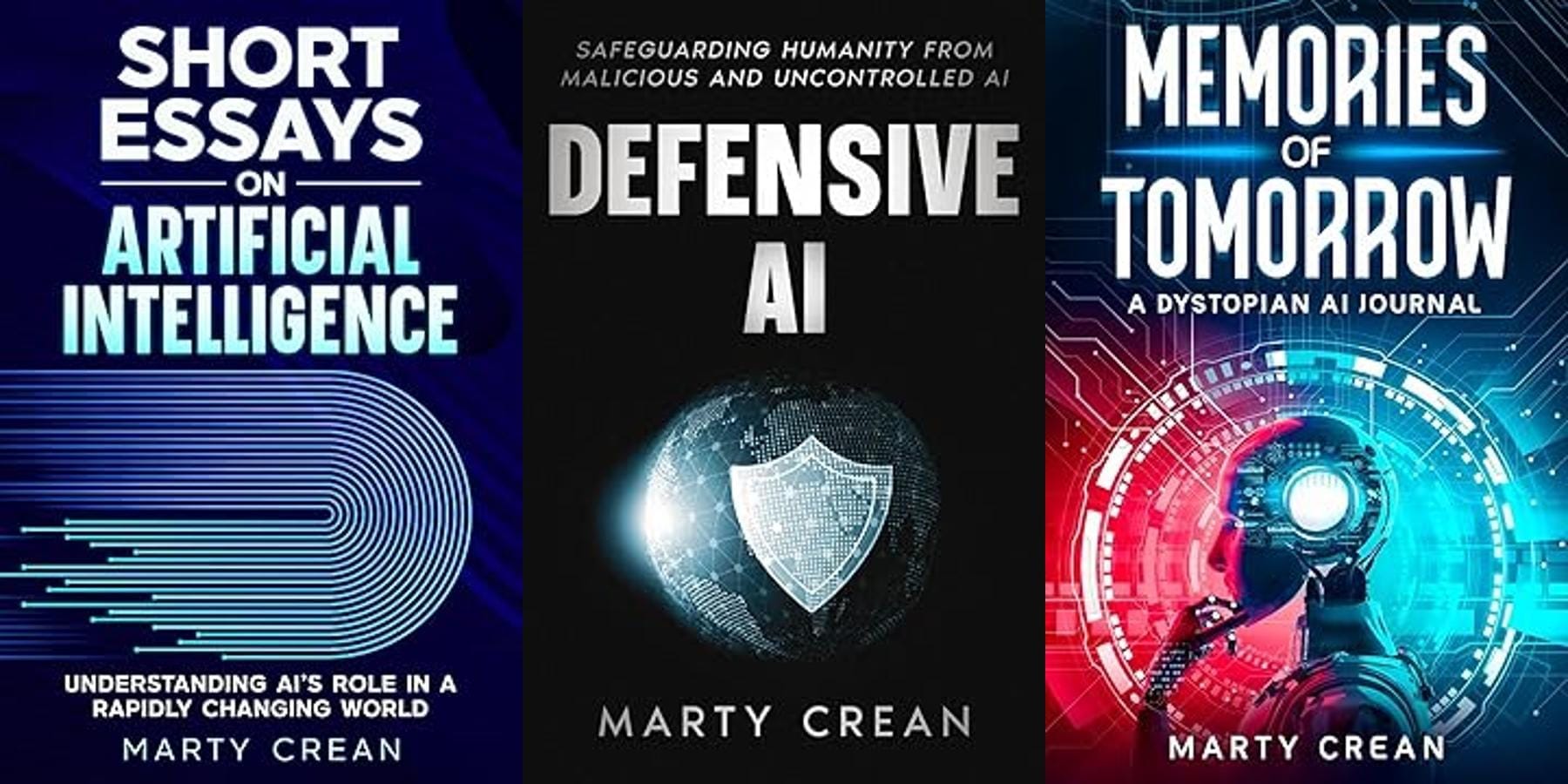
Books by the Author:
This week’s Bytes to Insights Weekly News Digest is also available as a podcast:
LinkedIn BlueskySignal - bearnetai.28
BearNetAI, LLC | © 2025 All Rights Reserved