Bytes to Insights: Weekly News Digest for the Week of November 23rd, 2025

Welcome to Bytes to Insight for the week of November 23rd, 2025, where we discuss the latest breakthroughs and trends in artificial intelligence.
During the week of November 23, 2025, several major developments in artificial intelligence captured global attention, highlighting how fast AI is shifting from research labs into national strategy, scientific discovery, and everyday tools.
In the United States, the government made a bold move to accelerate AI-enabled science by launching the Genesis Mission. This nationwide effort, spearheaded by the U.S. Department of Energy (DOE), aims to build an integrated AI platform that harnesses decades of federal scientific data. The goal is to deploy foundation models and AI agents to advance research in critical areas like energy, biotechnology, materials science, and national security. Officials framed the mission as a historic push , on par with past large-scale scientific endeavors, to turn AI into a tool for tackling the most difficult scientific and technical challenges the country faces.
In parallel, private-sector AI development surged. Google rolled out significant upgrades including Gemini 3, which expands Google’s AI capabilities across search, mobile, and daily productivity tools. Alongside Gemini 3 came the release of Nano Banana Pro , a high-fidelity image-generation and editing tool demonstrating how generative AI continues to mature and integrate into creative workflows. Google also continued investing heavily in AI infrastructure, further blurring the lines between research, consumer-facing products, and cloud computing.
On the scientific and medical front, researchers revealed a breakthrough: a new AI model called popEVE was developed to analyze genomic data and predict which genetic variants are likely to cause disease. In trials, popEVE identified more than 100 previously unknown variants linked to rare and sometimes fatal conditions, opening a promising path toward faster, more accurate diagnoses and potentially accelerated drug-target discovery.
All this momentum occurs amid growing reflection on the broader implications of AI’s rise. Leaders in the field are beginning to weigh the benefits of AI-driven progress in medicine, science, and productivity against potential risks, power dynamics, and ethical challenges. With heavy investment from governments and tech giants, and rapid advances in model capabilities, AI increasingly feels like a core national priority and a force reshaping entire industries.
Anthropic released Claude Opus 4.5, marking its most capable model to date and intensifying the competition among frontier AI systems. The model achieved a breakthrough 80.9 percent success rate on SWE-bench Verified, becoming the first to exceed 80 percent on this respected coding benchmark and outperforming both Google's Gemini 3 Pro and OpenAI's GPT-5.1. Anthropic positioned Opus 4.5 as excelling in coding, agentic workflows, and computer-use tasks, with early testers reporting that the model handles ambiguity without handholding and solves problems that proved near-impossible for its predecessor, Sonnet 4.5, just weeks earlier. The company made substantial progress in robustness against prompt injection attacks. It significantly reduced pricing compared to the previous Opus model, cutting costs to $5 per million input tokens and $ 25 per million output tokens. This pricing makes Opus-level capabilities accessible to broader audiences while remaining competitive with rivals. Alongside the model release, Anthropic expanded Claude for Chrome to all Max users and made Claude for Excel generally available to Max, Team, and Enterprise subscribers, demonstrating the company's push toward practical workplace integration.
Amazon Web Services made headlines with a $50 billion commitment to build AI and high-performance computing infrastructure specifically designed for U.S. government agencies. This massive investment will add 1.3 gigawatts of compute capacity and expand federal access to AWS products, including Amazon SageMaker AI, Amazon Bedrock, and Anthropic's Claude chatbot. The company expects to break ground on these data center projects in 2026, with AWS CEO Matt Garman describing the initiative as fundamentally transforming how federal agencies leverage supercomputing. This announcement came during the broader AWS Invent conference period, which saw numerous other launches, including the Trainium3 Ultra Servers powered by AWS's third-generation training chips, which deliver over four times the performance and efficiency of previous generations. The timing underscores the intensifying competition among cloud providers to secure massive long-term AI infrastructure serving both government and commercial customers.
The competitive dynamics in AI infrastructure became more visible through MediaTek's remarkable stock performance. The Taiwanese chipmaker's shares posted their best week since 2002, surging 22 percent as investors responded enthusiastically to Google's latest Gemini model and reports that MediaTek has partnered with the company on tensor processing unit design. These chips are seen as potential rivals to Nvidia's dominant position in AI applications, reflecting the broader diversification of the AI hardware ecosystem beyond a single dominant player.
The week also brought renewed discussion about whether the AI industry is experiencing a bubble. An NPR analysis highlighted concerns about circular investment patterns, such as Nvidia's $100 billion deal with OpenAI, in which Nvidia essentially finances its customers' purchases of its chips. Critics pointed to similarities with the dot-com era's overbuilding of fiber-optic infrastructure, warning that if AI demand steadies rather than continues to grow exponentially, the industry could face overcapacity and a potential financial crisis. However, defenders noted that current AI revenues are already substantial, unlike the pre-revenue dot-com companies, and that infrastructure investments create durable assets even if some overcapacity emerges. The Bank of England raised concerns about valuations resembling those of the dot-com bubble. At the same time, Federal Reserve Chair Jerome Powell argued that the AI boom differs fundamentally from that earlier era.
On the regulatory front, New York implemented the nation's first law targeting surveillance pricing on November 10th, with effects reverberating through the week. The Algorithmic Pricing Disclosure Act requires retailers to disclose when they use AI algorithms and personal data to set individualized prices for goods and services online. This represented a significant privacy protection milestone as concerns grow about AI's role in potentially discriminatory or exploitative pricing practices.
Healthcare applications of AI advanced with Philips releasing a new generation of cardiac magnetic resonance imaging tools on November 26th. The company's SmartSpeed Precise technology enables scans up to three times faster with 80 percent sharper images, while SmartHeart automates complete cardiac setups in under 30 seconds. These AI-powered diagnostic tools aim to improve accessibility and speed in diagnosing heart conditions, addressing global shortages in cardiology expertise by automating complex imaging workflows.
The week's developments collectively illustrated how AI is transitioning from experimental technology to critical infrastructure, warranting massive public and private investment, government coordination, and regulatory attention.
Support BearNetAI
BearNetAI exists to make AI understandable and accessible. Aside from occasional book sales, I receive no other income from this work. I’ve chosen to keep BearNetAI ad-free so we can stay independent and focused on providing thoughtful, unbiased content.
Your support helps cover website costs, content creation, and outreach. If you can’t donate right now, that’s okay. Sharing this post with your network is just as helpful.
Thank you for being part of the BearNetAI community.
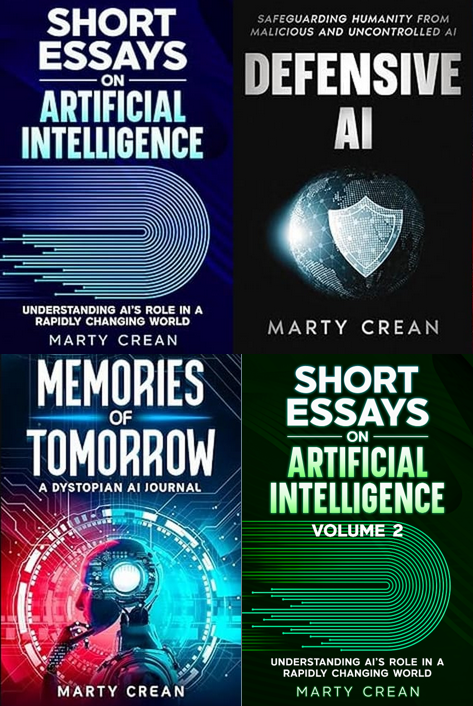
Books by the Author:
This week’s Bytes to Insights Weekly News Digest is also available as a podcast:
LinkedIn BlueskySignal - bearnetai.28
BearNetAI, LLC | © 2025 All Rights Reserved