Bytes to Insights: Weekly News Digest for the Week of November 30, 2025

Welcome to Bytes to Insight for the week of November 30th, 2025, where we discuss the latest breakthroughs and trends in artificial intelligence.
This past week has seen a surge of momentum in artificial intelligence as both companies and researchers rolled out significant developments that signal a new phase of AI integration across industries. At the cloud and infrastructure level, Amazon introduced a wave of AI hardware and software upgrades at its re :Invent 2025 conference, including its new Graviton5 CPU, expanded “Amazon Nova” model family, and ultra-powerful Trainium3 UltraServers designed to let organizations run large-scale AI workloads in their own data centers.
Advances in robotics and safe physical AI are getting attention. Scientists at MIT CSAIL and associated labs have developed a new control system for soft robots that enables them to adapt safely while deforming and interacting with people or objects. Meanwhile, a broader technological shift involving AI fused with breakthrough technologies promises to reshape how we think about digital systems and physical devices, hinting at a near-term wave of “AI-enabled everything.”
Amid enthusiasm, there is growing public and institutional concern about the pace and direction of these changes. Some experts argue that the rhetoric around AI may have outpaced realistic expectations about what current systems can deliver. The trend toward lofty promises and “agentic” AI has triggered both caution and excitement.
The Atlantic hurricane season officially ended on November 30, providing a perfect case study for AI's growing capabilities in weather forecasting. The National Hurricane Center's integration of Google DeepMind's AI models during the 2025 season demonstrated breakthrough performance, particularly in predicting rapid intensification patterns that had long challenged traditional forecasting methods. The AI model gave forecasters unprecedented confidence about Hurricane Melissa's rapid intensification approximately three days before it struck Jamaica as a catastrophic Category 5 storm. This achievement represented what forecasters called the "holy grail" of hurricane prediction, with AI models proving especially valuable for intensity forecasts even as they complemented rather than replaced traditional physics-based approaches.
Amazon Web Services made headlines during the week with a massive $50 billion infrastructure commitment to expand AI and high-performance computing capabilities for U.S. federal agencies. The investment would add nearly 1.3 gigawatts of compute capacity across AWS's secure government cloud regions, enabling federal agencies to deploy large-scale AI systems for missions ranging from cybersecurity to scientific research. This announcement came as AWS prepared for its annual re:Invent conference in early December, where the company would unveil its third-generation Trainium3 chip and position AI agents as the next frontier for enterprise value creation.
The competitive dynamics among leading AI companies intensified during this period. Reports emerged that OpenAI CEO Sam Altman had issued an internal "code red" alert as competitors Google and Anthropic gained ground with their latest model releases. Google's Gemini 3 and Anthropic's Claude Opus 4.5, both released in late November, had topped industry benchmarks and earned widespread praise from users and developers. The pressure prompted OpenAI to fast-track a secret project reportedly focused on architectural optimization rather than raw model size, aiming to achieve better performance per dollar spent. This shift reflected a broader industry recognition that efficiency and practical deployment mattered as much as absolute capability.
New regulatory frameworks took shape across multiple jurisdictions. New York implemented the nation's first law targeting "surveillance pricing," in which retailers use AI algorithms and personal data to set individualized prices for online goods and services. The Algorithmic Pricing Disclosure Act represented a pioneering consumer protection measure in the AI era. Meanwhile, India introduced its first comprehensive AI Governance Guidelines, adopting a more flexible approach than Europe's prescriptive regulations. The Indian framework emphasized voluntary commitments and innovation incentives rather than strict compliance requirements, signaling divergent global approaches to AI oversight.
Healthcare applications continued advancing as researchers at Örebro University developed AI systems that analyze brain-wave data to distinguish between healthy individuals and those with dementia, including Alzheimer's disease and frontotemporal dementia. Harvard Medical School researchers unveiled popEVE, an AI model capable of predicting which genetic variants in a patient's genome are likely to cause disease and distinguishing variants that cause severe childhood illness from those with milder effects. These medical breakthroughs demonstrated AI's growing role in early disease detection and diagnostic precision.
The corporate AI adoption landscape showed mounting investment activity. Anthropic secured significant strategic partnerships with Microsoft and NVIDIA during the first week of the month, with combined investments totaling $15 billion, bringing the company's valuation to approximately $350 billion. OpenAI announced a strategic partnership with Intuit worth over $100 million annually, bringing TurboTax, QuickBooks, and other Intuit applications directly into ChatGPT. These deals reflected the accelerating integration of frontier AI models into enterprise workflows and consumer applications.
Concerns about AI's societal impacts also gained attention. The United Nations Development Programme warned that millions of jobs across Asia could be at risk as the AI industry concentrated benefits in wealthy nations while poorer countries struggled with basic digital access. The UN economists noted that women and young adults faced the greatest workplace threats from AI adoption, with potential setbacks in health, education, and income. The report estimated AI could inject nearly $1 trillion in economic gains across Asia over the next decade, but questioned whether these benefits would be distributed equitably across the region's vast economic disparities.
The week also saw legislative action aimed at addressing AI-related fraud. A bipartisan bill introduced in the U.S. House of Representatives, the AI Fraud Deterrence Act, proposes tightening penalties for criminals who use AI tools to commit fraud, impersonation, or other deceptive schemes. The proposed law would impose fines of $1 million to $2 million and prison sentences of up to 20-30 years for fraud involving AI-generated audio, video, or text. The legislation targeted growing concerns about deep-fakes and AI-enabled identity theft.
Infrastructure developments highlighted the massive capital requirements for AI advancement. Reports indicated that xAI, Elon Musk's AI venture, was closing a $15 billion funding round at a $230 billion valuation. The funding surge across the industry reflected both enormous confidence in AI's potential and recognition of the substantial computational resources required to train and deploy cutting-edge models. The infrastructure race extended beyond traditional tech hubs, with Google announcing a $40 billion investment in Texas for AI and cloud infrastructure, part of a broader push to expand capacity across America, Europe, Africa, and the Asia-Pacific region.
As the week concluded, the AI industry stood at a critical juncture. The rapid pace of model improvements, massive infrastructure investments, emerging regulatory frameworks, and expanding enterprise adoption all pointed toward AI's transition from experimental technology to foundational business infrastructure. The anniversary of ChatGPT's launch served as a reminder of how quickly the landscape had transformed. At the same time, the competitive pressures, governance debates, and equity concerns signaled ongoing challenges in shaping AI's societal impact.
Support BearNetAI
BearNetAI exists to make AI understandable and accessible. Aside from occasional book sales, I receive no other income from this work. I’ve chosen to keep BearNetAI ad-free so we can stay independent and focused on providing thoughtful, unbiased content.
Your support helps cover website costs, content creation, and outreach. If you can’t donate right now, that’s okay. Sharing this post with your network is just as helpful.
Thank you for being part of the BearNetAI community.
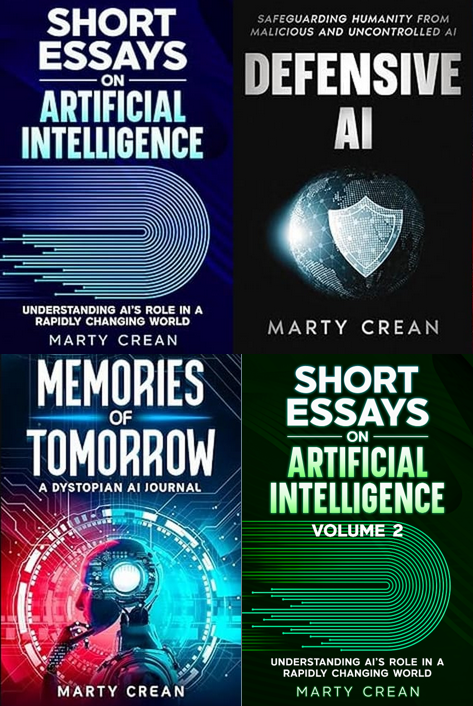
Books by the Author:
This week’s Bytes to Insights Weekly News Digest is also available as a podcast:
LinkedIn BlueskySignal - bearnetai.28
BearNetAI, LLC | © 2025 All Rights Reserved