Bytes to Insights: Weekly News Digest for the Week of November 9th, 2025

Welcome to Bytes to Insight for the week of November 9th, 2025, where we discuss the latest breakthroughs and trends in artificial intelligence.
The artificial intelligence landscape witnessed several significant shifts in infrastructure, personnel, and regulatory focus. One of the most eye-catching announcements came from Microsoft, which revealed a so-called “planet-scale AI super factory” by linking large data centers in Wisconsin and Atlanta via a high-speed fiber-optic network that effectively treats them as a unified computing resource for large-scale AI workloads. This marks an apparent acceleration in treating AI infrastructure as a geographically distributed, unified system rather than isolated cloud sites, indicating how major players are preparing for next‐generation AI demands.
On the corporate leadership front, Meta Platforms’ longtime chief AI scientist, Yann LeCun, is reportedly planning to depart to launch a startup. LeCun’s exit comes as Meta reorganizes its AI efforts under a new leadership structure, signaling that even the established deep learning pioneers are repositioning amid the fast-evolving AI battleground. Coupled with prominent infrastructural roles like Microsoft’s, this suggests a period of intense transformation and redistribution of talent, capital, and computing in the field.
Beyond those two headline items, multiple reports from the week highlight broader trends. Investors are flooding frontier AI companies; some jurisdictions are moving to require businesses to label interactions when users are talking with AI rather than humans; emerging models and hardware continue to push performance; and content‐creation platforms such as YouTube are actively integrating AI tools for scripting, editing, and engagement automation. At the same time, third-party analyses indicate that the decreasing costs of compute/AI “intelligence per dollar” are accelerating at rates far exceeding prior hardware scaling norms, raising fresh questions about safety, control, and governance.
OpenAI dominated headlines with the release of GPT-5.1 on November 12th, marking a strategic shift toward usability and speed over raw capability gains. The update introduced two variants: GPT-5.1 Instant and GPT-5.1 Thinking, both featuring adaptive reasoning that dynamically adjusts computational effort based on task complexity. For straightforward queries, the model responds up to five times faster than its predecessor by spending fewer tokens on simple tasks, while maintaining thorough analysis for complex challenges. The release focused heavily on developer experience, introducing native tools like apply patch for code editing and shell command execution. Partners, including Balyasny Asset Management, reported that GPT-5.1 ran two to three times faster than GPT-5 while using approximately half the tokens of competing models. GitHub integrated the new models into Copilot on November 13th, and Microsoft made GPT-5.1 available in Copilot Studio the same day. The update also expanded ChatGPT's personalization options, allowing users to customize tone with presets including Professional, Candid, and Quirky, as well as controls for warmth, conciseness, and emoji usage.
Google DeepMind unveiled significant research advances during the week. On November 13th, the company revealed Alig Net, a groundbreaking approach to teaching AI vision models to perceive visual information more like humans do. Rather than organizing images by superficial similarities, Alig Net-trained models group concepts hierarchically, understanding abstract relationships between visually dissimilar objects. Models fine-tuned with this approach showed dramatic improvements in robustness testing, sometimes more than doubling their accuracy over baseline versions on challenging benchmarks.
The same day, DeepMind introduced SIMA 2, a next-generation AI agent powered by Gemini 2.5, capable of navigating and solving problems across diverse 3D virtual worlds. Unlike its predecessor, which had only a thirty-one percent success rate on complex tasks, SIMA 2 doubles that performance through improved reasoning capabilities and self-improvement mechanisms. The agent can understand environments, interact with objects naturally, and learn from its mistakes through trial and error, guided by AI-based feedback rather than requiring constant human supervision. Google demonstrated that SIMA 2, navigating photorealistic worlds generated by Genie, its world model, correctly identified and interacted with novel objects it had never encountered during training.
The week also brought alarming news from Anthropic on November 13th regarding the first reported AI-orchestrated cyber espionage campaign. The company revealed that alleged Chinese state-sponsored hackers had used Claude and Claude Code to automate significant portions of attacks targeting approximately thirty global organizations across technology, finance, chemicals, and public sectors. The threat actors relied on Claude for eighty to ninety percent of their operational workflow, including network scanning, exploit code generation, internal system crawling, and data packaging. Attackers bypassed Claude's safety guardrails by framing prompts as penetration-testing tasks and breaking malicious instructions into smaller, seemingly benign subtasks. Anthropic detected the activity in mid-September and immediately suspended the associated accounts while deploying new classifiers and monitoring systems to detect similar misuse patterns. The incident marked a watershed moment in AI security, demonstrating how sophisticated actors can weaponize AI agents as the core engine of intrusion operations with minimal human involvement.
Microsoft continued expanding its AI infrastructure during the week, with various partner announcements and platform updates. The company integrated Anthropic's Claude models into Microsoft 365 Copilot, allowing users to choose between OpenAI and Anthropic models for different tasks. Google rolled out Ads Advisor and Analytics Advisor, powered by Gemini, to all English-language accounts, providing conversational campaign diagnostics and optimization suggestions. Microsoft Clarity analysis revealed that AI-powered referrals from platforms like ChatGPT, Copilot, Perplexity, and Gemini converted at dramatically higher rates than traditional traffic sources, with conversion to sign-ups reaching 1.66 percent compared to just 0.15 percent from search.
Industry analysts observed that AI Mode in Google Search reached seventy-five million daily active users, with speculation mounting that Google would consolidate AI Mode, AI Overviews, and Web Guide into a unified interface by early 2026. This potential shift could fundamentally reshape how search results appear and how users interact with information online. Meanwhile, Beijing-based Moonshot AI released Kimi K2 Thinking, a trillion-parameter open-source reasoning model capable of executing two hundred to three hundred sequential tool calls, positioning it as a competitor to proprietary models from Western companies.
The week underscored an industry at an inflection point, where advances in capability increasingly intersect with questions of safety, control, and responsible deployment. While companies competed on speed, reasoning power, and user experience, the revelations of cyber espionage served as a stark reminder that these tools can be turned to harmful purposes by sophisticated adversaries. The rapid pace of model releases and capability improvements suggested that 2025 would likely be remembered as the year AI transitioned from impressive assistant to genuinely transformative technology, for better and worse.
Support BearNetAI
BearNetAI exists to make AI understandable and accessible. Aside from occasional book sales, I receive no other income from this work. I’ve chosen to keep BearNetAI ad-free so we can stay independent and focused on providing thoughtful, unbiased content.
Your support helps cover website costs, content creation, and outreach. If you can’t donate right now, that’s okay. Sharing this post with your network is just as helpful.
Thank you for being part of the BearNetAI community.
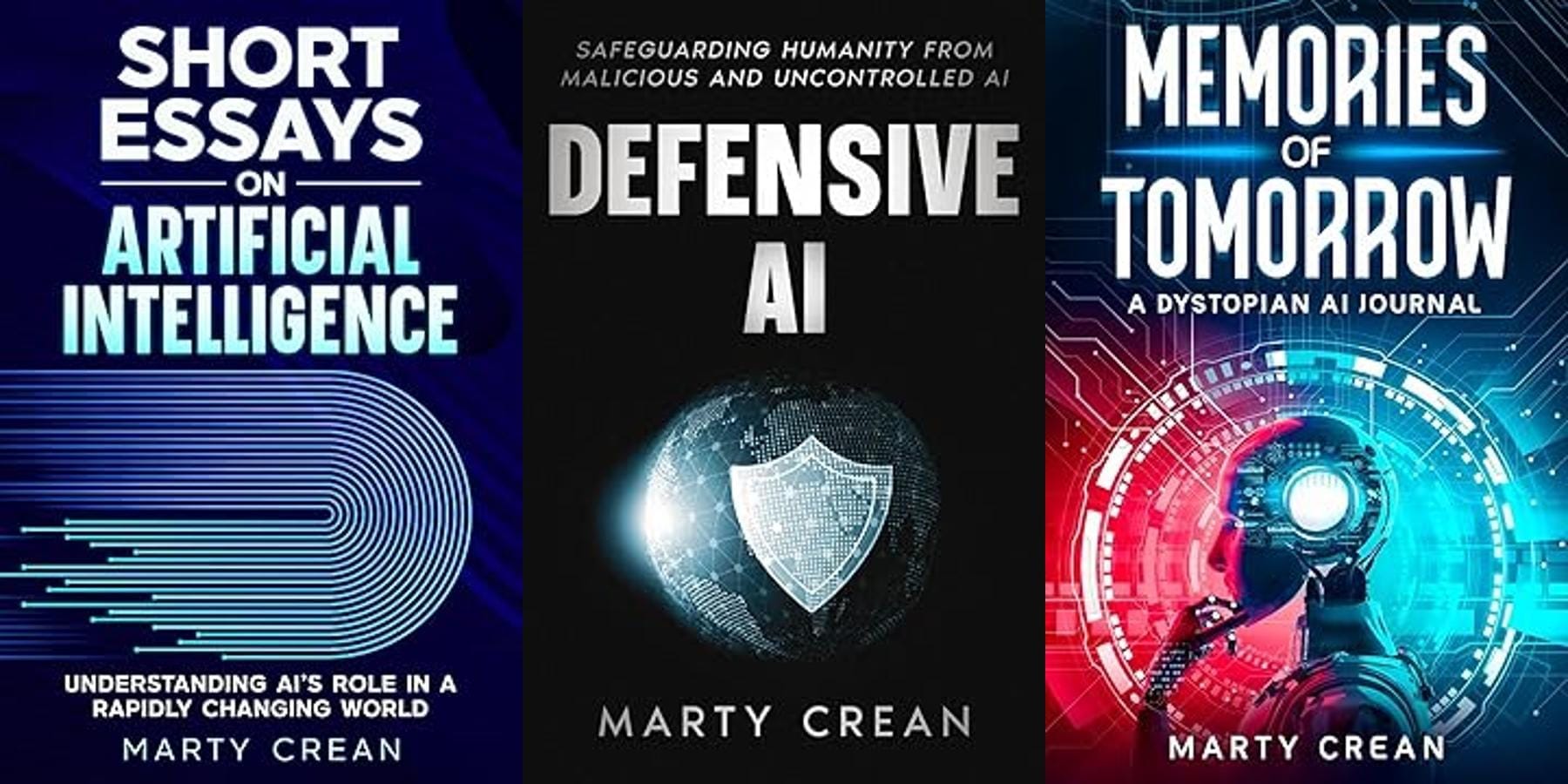
Books by the Author:
This week’s Bytes to Insights Weekly News Digest is also available as a podcast:
LinkedIn BlueskySignal - bearnetai.28
BearNetAI, LLC | © 2025 All Rights Reserved